
The best way to showcase the image-capturing strengths of a Sony A7 III is to treat the camera to glass worthy of it. The full-frame 24.2MP Exmor R sensor in the A7 III will do its part with any E-mount optics attached, but only the right lenses render expansive scenes on this camera with the clarity it is capable of — and in 2026, seven years into the A7 III’s life, the lens choices are actually better and cheaper than they were at launch.
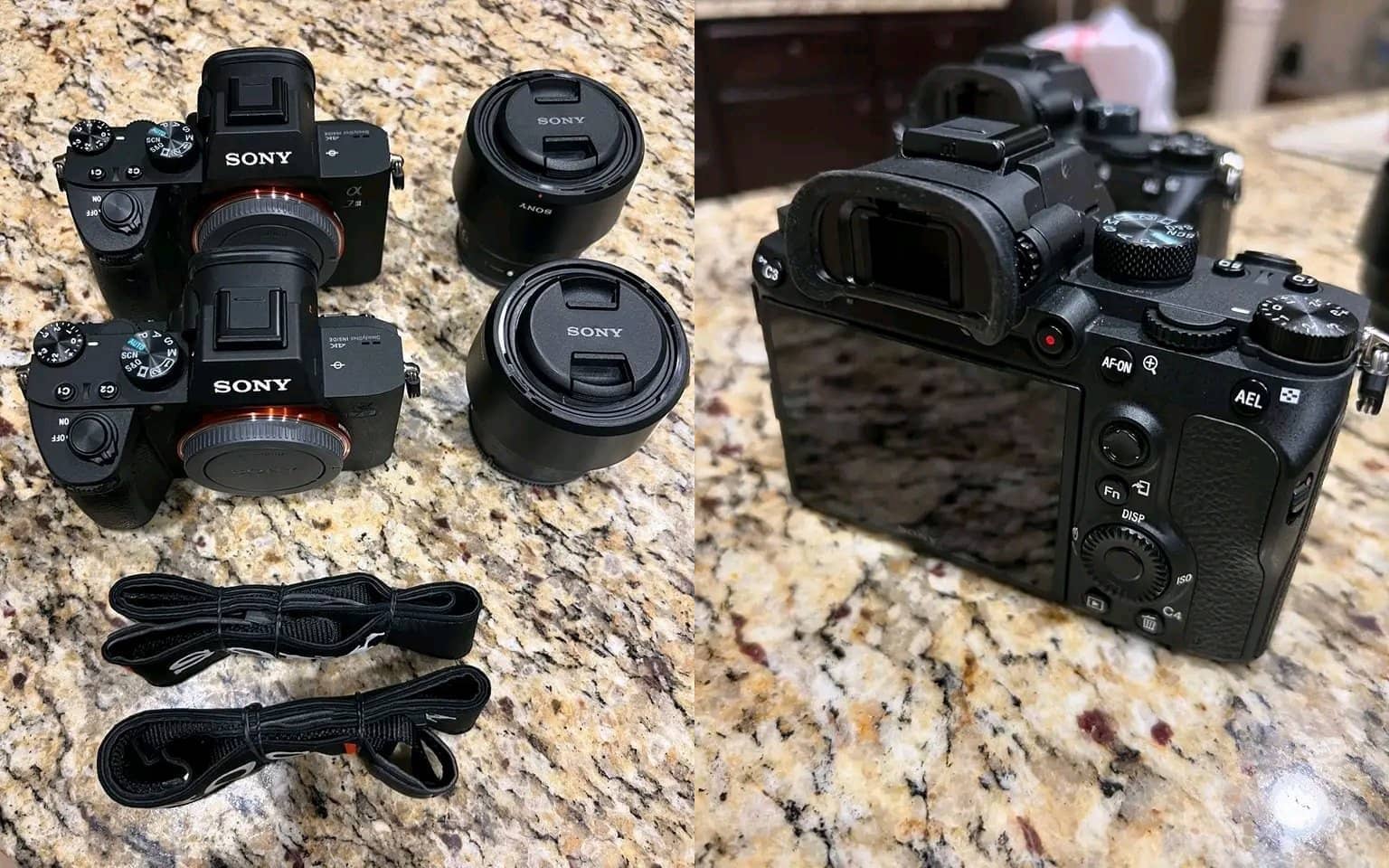
The short version, verified in stock August 16, 2026: the Sony FE 24-70mm f/2.8 GM II is the best overall lens for an A7 III, the Sigma 24-70mm f/2.8 DG DN II Art gets you most of that performance for hundreds less, the Sony 35mm f/1.4 GM is the prime worth building a kit around, and the little Sonnar 55mm f/1.8 ZA is the budget prime that overperforms its size. The 20mm f/1.8 G covers ultra-wide, the 90mm f/2.8 Macro G owns close-up work, and the 70-200mm GM II and 200-600mm G cover everything far away. What changed since this page’s last update is not the optics — it is where you buy them.
|
Best Overall
|
Best Value Zoom

|
Best Prime
|
Best Budget Prime

|
|
$2,448.00
|
$1,219.00
|
$1,498.00
|
$1,098.00
|
The Best Lenses for the Sony A7 III in 2026
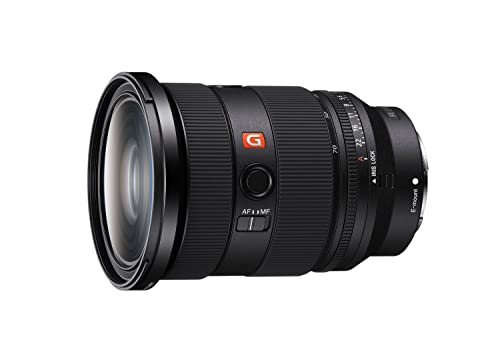
Sony FE 24-70mm f/2.8 GM II — Best Overall
The GM II remains the single best answer to “one lens, every assignment” on an A7 III. Across its 24-70mm range it is critically sharp edge to edge, the nano AR II coating keeps ghosting out of backlit frames, and the 11-blade aperture draws the kind of background falloff that made the G Master name. Four XD linear motors drive autofocus fast enough to keep the A7 III’s hybrid AF locked on moving subjects, and at 24.6 ounces it is remarkably light for a pro standard zoom — 15 groups, 20 elements, five of them aspherical, in a barrel barely five inches long, with the aperture ring, iris lock and two focus-hold buttons pros expect.
The considerations before checkout: this is the most expensive standard zoom you can put on an A7 III, and its current Amazon presence runs through import storefronts — the price advantage those listings show comes with the warranty caveat in the note above. If either bothers you, the Sigma below exists precisely for that reason.
Sigma 24-70mm f/2.8 DG DN II Art — Best Value Standard Zoom
24-70mm F2.8 DGDN II for Sony E
- A large share of GM II performance for hundreds less
- Sharper wide open than the first DG DN, with faster HLA autofocus
- Proper aperture ring and fresh six-FLD optical design
- A little heavier than Sony's own GM II
- Zoom ring turns the opposite way from Sony lenses
- Small-batch third-party storefront — watch the live box
Sigma’s second-generation Art standard zoom replaces the original DG DN that used to hold this slot — the old version’s listing is down to its last unit, and the II is better glass anyway: sharper wide open, faster HLA autofocus, a proper aperture ring, and six FLD elements in a fresh optical design. On an A7 III it delivers a genuinely large share of the GM II’s performance for hundreds of dollars less, which is why the value slot on this page stays Sigma even as the generation changes.
Trade-offs, honestly stated: it is a little heavier than Sony’s own GM II — Sigma spent its weight budget on glass, not grams — the zoom ring turns the opposite way from Sony lenses, which takes a week of muscle memory, and the current listing is a small-batch third-party storefront, so watch the live box. None of that dents the math: this is the smart money’s standard zoom.
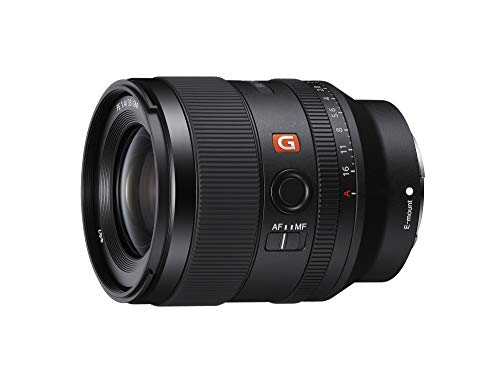
Sony FE 35mm f/1.4 GM — Best Prime
Sony FE 35mm f/1.4 GM Full-Frame Large-Aperture Wide Angle G Master Lens
- Noticeably sharper wide open than the Distagon it replaces
- Twin XD motors — fast, silent autofocus for stills and video
- A third lighter than the old 35mm f/1.4 ZA
- In stock through a well-known US camera dealer
- Four-figure prime — the 55mm Sonnar covers daylight for far less
- Earns its premium in aperture and AF, not a night-and-day sharpness gap at f/5.6
- Dealer stock, not first-party — check the seller at checkout
The prime slot gets a generational upgrade this update: the Zeiss-branded Distagon 35mm f/1.4 ZA that used to sit here is a 2015 design now down to its final units, and Sony’s own 35mm f/1.4 GM is its successor in every sense — noticeably sharper wide open, faster and quieter twin-XD-motor autofocus, a third lighter, and better behaved against bright light. On an A7 III it is the walk-around, low-light, environmental-portrait lens: f/1.4 keeps ISO down after dark, and the rendering at close distance is the reason people build kits around a 35.
What to weigh: it is a four-figure prime, and the value question against the little 55mm below is real — the GM earns its premium in aperture, autofocus authority and build, not in some night-and-day sharpness gap at f/5.6. The listing we point to is a well-known US camera dealer, currently in stock, which in 2026’s channel chaos counts for a lot.
Sony Sonnar FE 55mm f/1.8 ZA — Best Budget Prime
A decade on, the little Sonnar remains one of the highest-value lenses on the E mount. Ten ounces, five groups and seven elements with the Zeiss T* coating, and per-frame results that still stand up next to primes three times its weight: contrast-rich, aberration-free, with that clean Sonnar rendering that flatters event and portrait work. On an A7 III it makes the whole camera feel like a discreet street kit, and its current listing sells through an established US photo dealer, in stock.
Its age shows in exactly two places: the autofocus motor is quick but audibly a generation older than the XD-motor lenses on this page, and f/1.8 gives up two-thirds of a stop to the 35GM in the dark. Neither matters at this price — as a first prime for an A7 III, it is still the default recommendation.
Sony FE 20mm f/1.8 G — Best Ultra-Wide
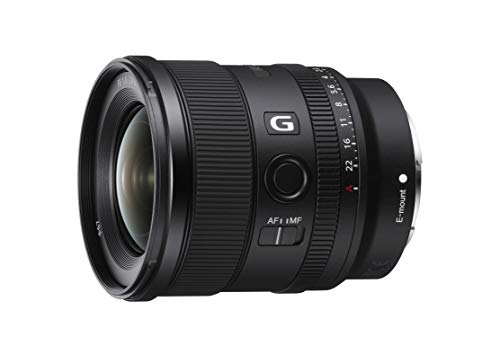 Sony FE 20mm F1.8 G Full-Frame Large-Aperture Ultra-Wide Prime Angle G Lens, Model: SEL20F18G,Black
For architecture, big landscapes, cramped interiors and astrophotography, the 20mm f/1.8 G covers a 94-degree field of view with even, edge-to-edge illumination that cheap ultra-wides cannot fake. The 12-group, 14-element design with advanced aspherical glass keeps lines straight and corners bright, the f/1.8 aperture pairs with the A7 III’s high-ISO tolerance for clean night skies, and the two XD motors focus silently for video. It is the wide lens this camera deserves, in a barrel light enough to stay in the bag every day.
Being a wide prime, it asks the usual questions: dramatic subject-isolation bokeh is not what 20mm does, and if you already own a 24-70 the case rests entirely on the extra 4mm and the two extra stops of light. Current stock is import-channel FBA with units in the mid-teens and more on the way — watch the box.
Sony FE 90mm f/2.8 Macro G OSS — Best Macro
 Sony SEL90M28G FE 90mm f/2.8-22 Macro G OSS Standard-Prime Lens for Mirrorless Cameras,Black
The 90mm Macro G is still the reference macro on the E mount: true 1:1 magnification at a working distance that does not scare small subjects, optical stabilization that matters enormously at macro distances on the A7 III’s in-body system, and a focus-range limiter plus sliding AF/MF clutch ring that make close work feel deliberate rather than fiddly. The 11-group, 15-element optics resolve fine detail — insect wing texture, product stitching, ring engravings — with essentially no chromatic aberration.
Two things to know: the DDSSM focus motor predates Sony’s XD generation, so continuous AF on fast-moving subjects is not its game — macro shooters focus deliberately anyway — and at just under four figures it is an investment in a specialty. For product photographers and nature close-up work, it repays every dollar; casual users should rent one first.
Sony FE 70-200mm f/2.8 GM OSS II — Best Telephoto Zoom
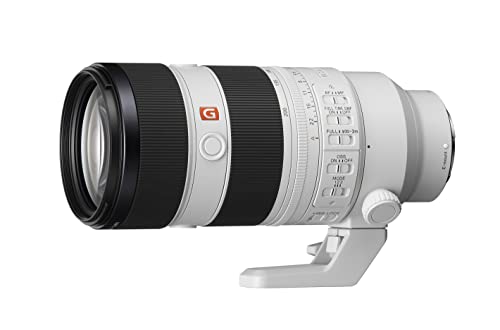 Sony FE 70-200mm F2.8 GM OSS II Full-Frame Constant-Aperture telephoto Zoom G Master Lens (Renewed)
The 70-200 GM II is the telephoto workhorse: constant f/2.8, exceptional sharpness across the range, and — at 37 ounces — dramatically lighter than this class used to be, which your shoulder notices by hour three of an event. Four XD motors keep the A7 III’s tracking glued to athletes and processions, Optical SteadyShot II steadies the long end, and the 14-group, 17-element formula with XA and Super ED glass holds contrast into the corners. The 85-135mm stretch doubles as one of the best portrait ranges money can buy.
The honest ledger: it is a serious financial commitment, teleconverters are extra, and its Amazon presence is currently a US dealer holding single-digit stock — the live box decides the day. If the price stings, this is the lens where buying clean used glass from a reputable dealer makes the most sense.
Sony FE 200-600mm f/5.6-6.3 G OSS — Best Super-Telephoto
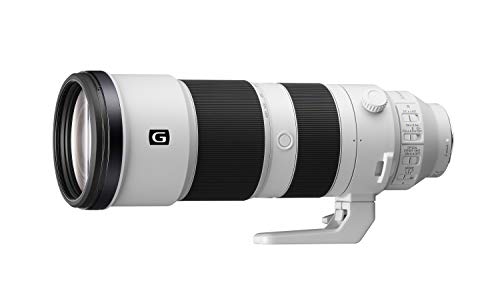
For wildlife and field sports there is still nothing on the E mount quite like the 200-600 G: an internal zoom that keeps the barrel’s balance constant, five ED elements holding resolution all the way out, OSS taming the shake that 600mm magnifies, and compatibility with Sony’s 1.4x and 2.0x teleconverters for reach up to 1200mm. On an A7 III it is the affordable door into serious bird-and-beast photography, and its rendering at the long end remains the reason this lens shows up on sidelines everywhere.
Weigh before you buy: at over four and a half pounds it is a commitment to carry, f/6.3 at 600mm wants good light or high ISO, and its Amazon stock has thinned to single units at a same-day-shipping dealer as of this update — if the box below reads empty, check back or buy from a major photo retailer rather than paying a scalper’s markup.
What Happened to Our Old Picks
Six of the eight lenses on this page carry over — good optics age slowly — but two slots changed hands, and the shelf under all eight changed completely. The original Sigma 24-70mm DG DN Art gave way to its Mark II successor: the first version’s listing is down to its last unit with no buy box, and the II outresolves it anyway. The Sony Zeiss Distagon 35mm f/1.4 ZA, a 2015 design at the end of its retail life, hands its slot to the 35mm f/1.4 GM that replaced it in Sony’s own lineup. And across the board, Sony’s first-party Amazon listings gave way to dealer and import storefronts — the channel note at the top of this page is new for exactly that reason.
Beyond that, the buying advice that closes every version of this page still holds: buy the lens that suits the work you actually shoot, not the spec sheet that photographs best. A wedding shooter’s 24-70 plus 55 kit and a birder’s 200-600 have nothing in common except the camera — and with names like Sony, Zeiss and Sigma across the E mount, there is no wrong brand on this list, only wrong assignments.
Bonus:
- The 7 Best Lenses for Landscape Photography (2026)
- The 5 Best Tripods for Photography (2026)
- The 6 Best Memory Cards for Your Camera (2026)
- The 14 Best Cameras for Photography (2026)
Last updated: August 16, 2026 — 2026 refresh: all eight listings re-verified, the Sigma 24-70mm slot upgraded to the DG DN II, the 35mm prime slot upgraded from the Zeiss Distagon to the 35mm f/1.4 GM, a comparison table with live pricing added, and a new note on how Sony glass actually sells on Amazon now.