

After re-verifying every listing in this guide, our verdict for 2026 is clear: the Sony A7 V is the best camera for photography most people can actually buy, with its 33MP partially stacked sensor and the deepest lens ecosystem in the business. The Canon EOS R6 Mark III is the runner-up and the better pick if you shoot as much video as stills, the Nikon Z5 II is the best full-frame value on the shelf, and the Canon EOS R50 kit remains the cheapest way into a serious system. Beyond those four, we kept or added ten more picks — from the pocketable Ricoh GR IV to the do-everything Sony RX10 V superzoom and the Nikon D850, the last DSLR still worth buying new.
The Amazon camera shelf has changed — read this before you buy (August 2026). When we rebuilt this guide, 19 of our 20 previous listings had died, drifted to third-party sellers, or quietly morphed into different products. Camera makers have largely pulled first-party stock from Amazon, so most bodies are now sold by camera dealers — some excellent (Adorama, Beach Camera, Unique Photo, District Camera, Focus Camera, K&M), some anonymous. Every pick below was verified in stock with an identified seller on the date of this update, and the price boxes pull live data. Before you check out, glance at the “Sold by” line: if it is not the brand, Amazon itself, or a dealer you can Google, buy elsewhere — and be aware that gray-import copies may not carry a US manufacturer warranty.
Quick comparison — our top four
|
Best Overall

|
Best Runner-Up

|
Best Full-Frame Value

|
Best Budget Kit

|
|
$2,898.00
|
$2,799.00
|
$1,696.95
|
$799.00
|
How we picked in 2026
Three filters produced this list. First, current relevance: we rebuilt the lineup around the cameras that lead the 2026 guides and lab tests at DPReview, PetaPixel, TechRadar, Tom’s Guide, Engadget and Amateur Photographer, then checked every headline spec against the manufacturer’s own product pages. Second, channel health: a camera only earns a slot if we could verify a live Amazon listing from an identified, reputable seller — that filter alone killed more former picks than any spec ever did. Third, coverage: photography is not one hobby, so the list runs from a $600 starter body to pro hybrids, with dedicated picks for street, travel, video and wildlife. Where our team has not handled a model long-term, the weaknesses cited come from extended reviews and owner feedback we collected, not from imagination.
The best cameras for photography in 2026 — everything we recommend
Sony A7 V — Best Overall
Sony Alpha a7 V Full-Frame Mirrorless Digital Camera Body (ILCE-7M5) 33MP, AI Autofocus, 30 FPS, 4K 120p Video, 7.5-Stop IBIS Bundle with Memory Card, Deco Gear Camera Case & Accessories Kit
- 33MP partially stacked sensor with 30fps blackout-free bursts
- AI subject recognition covers people, animals, birds and vehicles
- 7.5-stop in-body stabilization
- 7K-oversampled 4K60 full-width video, 4K120 in Super 35
- Deepest native lens ecosystem of any mount
- No internal RAW or open-gate recording at a price where rivals offer both
- Launch price crept up again over the A7 IV
- Amazon stock flows through third-party dealers, so check the seller line
Sony finally gave its do-everything camera the speed it was missing. The A7 V pairs a new 33MP partially stacked full-frame sensor with a dedicated AI processing unit, and the result is 30fps blackout-free bursts, subject recognition that covers people, animals, birds, insects, cars and trains, and in-body stabilization rated to 7.5 stops at the center — up from 5.5 on the A7 IV. Video gets 7K-oversampled 4K60 from the full sensor width and 4K120 in Super 35, and the 3.2-inch screen finally articulates on four axes. PetaPixel measured the readout gains and DPReview’s review called it a do-it-all powerhouse for E-mount shooters, which matches why it tops TechRadar’s photography rankings this year. Add the deepest native lens catalog of any mount and this is the safest serious-money camera purchase of 2026.
It is not flawless. Our team’s two consistent gripes from the first wave of long-term owners: there is still no internal RAW video or open-gate recording at a price where Canon and Panasonic offer both, and the launch price crept up yet again over the A7 IV. Amazon stock comes through authorized dealers like Beach Camera rather than Sony itself, so watch the seller line.
Canon EOS R6 Mark III — Best Runner-Up
Canon EOS R6 Mark III Mirrorless Camera with Extra Canon LP-E6P Battery
- 32.5MP sensor with 40fps electronic bursts
- 7K60 RAW and 7K30 open-gate video
- 8.5-stop in-body stabilization
- 120Hz OLED viewfinder
- Verified listing ships with a spare LP-E6P battery
- No active cooling, so long 7K RAW takes can hit thermal limits
- Mediocre CIPA battery rating for full event days
If the A7 V is the safest pick, the R6 Mark III is the one that wins on raw ambition. Canon bumped the sensor to 32.5MP, doubled down on speed with 40fps electronic bursts, and gave it a video spec that embarrasses cameras a class up: 7K RAW at 60fps, 7K open-gate at 30fps for social crops, and 4K120 — plus in-body stabilization rated to 8.5 stops and a 120Hz OLED viewfinder. Tom’s Guide calls it a seriously impressive mid-range masterpiece, and Engadget rates it the best mid-range choice for content creators this year. For weddings, events and hybrid work, this is the most complete camera under $3,000.
The trade-offs our team keeps hearing about: there is no active cooling, so extended 7K RAW sessions can hit thermal limits, and the CIPA battery rating is mediocre for long event days — carry spares. The listing we verified is sold at list price by K&M Camera, a New York dealer in business since 1976, and ships with a spare LP-E6P battery, which softens the second complaint.
Nikon Z5 II — Best Full-Frame Value
Nikon Z5 II | Full-Frame mirrorless Stills/Video Camera | USA Model, Black
- Flagship EXPEED 7 subject detection at a mid-range price
- 24.5MP BSI sensor with 30fps JPEG pre-capture bursts
- 7.5-stop in-body stabilization
- 3,000-nit viewfinder readable in full sun
- Authorized-dealer listing below launch price
- 4K60 video takes a 1.5x crop
- 330-shot battery rating means carrying a spare
Nobody puts this much camera at this price except Nikon right now. The Z5 II takes the 24.5MP back-illuminated sensor formula and adds the EXPEED 7 processor from the Z8/Z9, which means flagship-grade subject detection, 30fps JPEG bursts with pre-capture, 7.5-stop stabilization and a 3,000-nit viewfinder you can read in noon sun. TechRadar’s verdict — a camera that blurs the line between entry level and mid-range — matches Amateur Photographer naming it the best full-frame camera for the money in 2026. For landscape, portrait and travel shooters who do not need a stacked sensor, this is the smart money.
Two things to budget around, per the review consensus our team collected: 4K60 video comes with a 1.5x crop (4K30 uses the full width), and the 330-shot CIPA battery rating means a second EN-EL15c for a full day out. Our verified listing comes from District Camera and Imaging, an authorized Nikon dealer, at street price below launch MSRP.
Canon EOS R50 — Best Budget Beginner Kit
Canon EOS R50 Mirrorless Vlogging Camera (Black) w/RF-S18-45mm F4.5-6.3 is STM Lens, 24.2 MP, 4K Video
Canon recently manufactured mirrorless cameras and has already released some interesting product lines for consumers to bring home. Canon R50 is one of the cameras that are worth considering. It has new features equipped from the flagship model, like second federation dual pixel autofocus, which can track face and eyes in both photo and video modes. It also supports 10-bit video capture for video production, which provides better data to edit in the post-production process. It has some other interesting features that even professionals appreciate.
- Pro-family subject-detection autofocus at entry price
- Clean oversampled 4K30 video
- 375g body with a proper viewfinder
- Stabilized RF-S 18-45mm kit lens included
- No in-body stabilization
- Buffer fills fast in RAW bursts
- Single UHS-I card slot caps ambitions
Three years after launch, the R50 is still the best answer to “I want a real camera and I have under a grand.” The 24.2MP APS-C sensor and DIGIC X processor give you the same subject-detection autofocus family as Canon’s pro bodies, stills at up to 15fps, and clean oversampled 4K30 — in a 375g body with a proper viewfinder, sold as a kit with the stabilized RF-S 18-45mm. It routinely beats phone cameras in exactly the situations phones fail: moving kids, pets, low light, and anything you want to print.
Know what you are giving up at this price. There is no in-body stabilization — the kit lens’s optical IS carries that load — the buffer fills fast if you shoot RAW bursts, and the single card slot is UHS-I only, so ambitious shooters will outgrow it. The kit listing we verified is sold by Cardinal Camera and Video Center, a Pennsylvania dealer chain, modestly above the old launch price — that is the 2026 camera shelf for you.
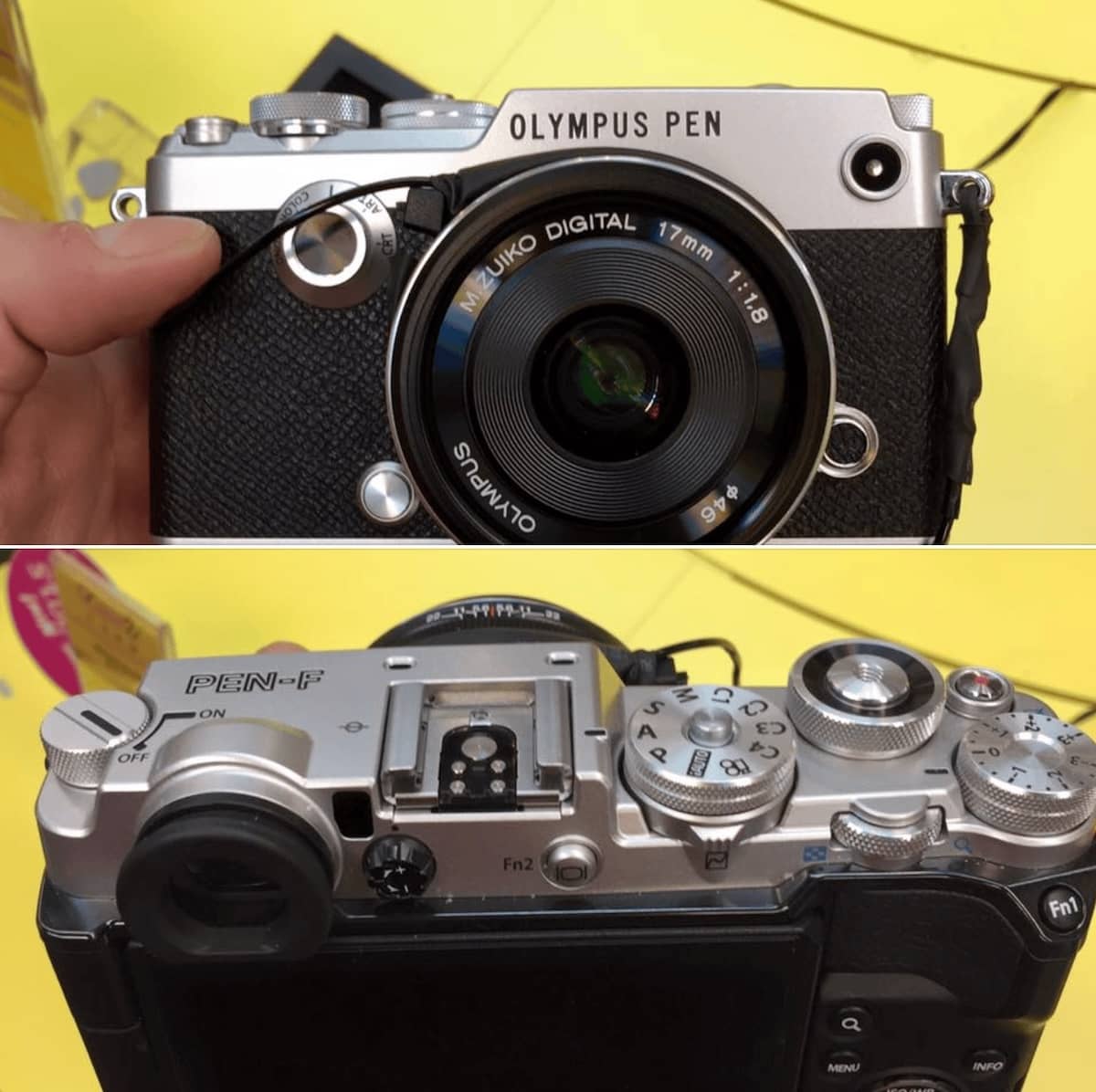
Olympus OM-D E-M10 Mark IV — Best Under $700
 OM SYSTEM Olympus E-M10 Mark IV Silver Micro Four Thirds System Camera 20MP Sensor 5-Axis Image Stabilization 4K Video Wi-Fi
- Real 5-axis in-body stabilization at a starter price
- 20.3MP sensor with 15fps bursts
- Pocketable 383g retro body
- Huge, affordable Micro Four Thirds lens catalog
- Still sold first-party by Amazon
- Contrast-detect autofocus hunts on fast subjects
- Older sensor generation limits low-light headroom
- Menus take time to learn
The E-M10 Mark IV has quietly become the last great starter camera that Amazon itself still stocks. You get a 20.3MP Micro Four Thirds sensor, real 5-axis in-body stabilization — something no rival offers anywhere near this price — 15fps bursts, 4K video and a flip-down touchscreen, all in a 383g retro body that TechRadar and Amateur Photographer both still list as the best value or best budget camera of 2026. Pair it with the tiny 14-42mm EZ pancake zoom and it slips into a jacket pocket; the used and new lens catalog for Micro Four Thirds is enormous and cheap.
The compromises are honest ones for the money. Autofocus is contrast-detect only, so it hunts on fast-moving subjects where phase-detect rivals lock on; the sensor generation is older and low-light ceilings are lower than APS-C; and the menu system still takes a weekend to befriend. For static subjects, travel and learning the craft, none of that matters much — and this was one of only four listings in this entire guide still sold first-party by Amazon.
Fujifilm X-T5 — Best APS-C
 Fujifilm X-T5 Mirrorless Digital Camera Body - Silver
- 40.2MP X-Trans sensor out-resolves every APS-C rival
- 7-stop in-body stabilization
- Dedicated ISO and shutter-speed dials
- Three-way tilt screen stays on the lens axis
- Film simulations make JPEGs printable straight out of camera
- Subject-tracking AF trails Sony and Canon for erratic movers
- Rolling shutter can bite on electronic-shutter action
- Amazon stock is thin dealer lots, so check back if unavailable
Three-plus years on, the X-T5 is still the APS-C camera to beat, and TechRadar’s 2026 guide agrees. The 40.2MP X-Trans sensor out-resolves every other crop camera, in-body stabilization is rated to 7 stops, and 6.2K30 video is there when you need it. What keeps owners loyal is the shooting experience: dedicated ISO, shutter-speed and exposure-compensation dials, a three-way tilt screen that stays on the lens axis, and Fujifilm’s film simulations that make straight-out-of-camera JPEGs genuinely printable. With the XF 16-55mm or a couple of primes, it is a complete landscape and travel system that undercuts full-frame kits by a wide margin.
Where it shows its age, per the long-term owner feedback our team reviewed: subject-tracking autofocus trails Sony and Canon for erratic movers, and the fast-readout compromises mean rolling shutter can bite on electronic-shutter action work. The bigger 2026 problem is the shelf itself — Fujifilm’s Amazon channel has thinned to small dealer lots (our verified listing, from Wholesale Photo, showed five units), so if it reads out of stock, check back or buy retail.
OM System OM-1 Mark II — Best Micro Four Thirds
 OM SYSTEM OM-1 Mark II Mirrorless Camera (Body Only)
- Blackout-free bursts up to 50fps with continuous AF
- Stabilization syncs to a class-leading 8.5 stops
- IP53 weather rating shrugs off rain
- Live GND and focus stacking replace a filter pouch
- Half the weight and lens cost of full-frame wildlife kits
- Four Thirds sensor gives up low-light headroom to full-frame rivals
- Viewfinder carried over unchanged from the original OM-1
- Full-frame money for a smaller sensor
The OM-1 Mark II remains the outdoor photographer’s cheat code. The 20MP stacked Micro Four Thirds sensor drives blackout-free bursts up to 50fps with continuous autofocus, stabilization syncs to a class-leading 8.5 stops, and the whole body is IP53-rated against exactly the weather that sends other cameras into a bag. Computational modes — Live GND, handheld high-res, in-camera focus stacking — replace a filter pouch, which is why Amateur Photographer’s 2026 guide crowns it for macro and field work. Half the weight of a full-frame wildlife kit at half the lens prices, it is the system for hikers, birders and anyone who shoots where it rains.
Physics still applies, and our experts are consistent about the limits: a Four Thirds sensor gives up one to two stops of low-light headroom against the full-frame bodies elsewhere on this list, and at this price that trade has to be a deliberate one. The viewfinder also carried over unchanged from the original OM-1. This was the sole survivor of our previous twenty listings still sold first-party by Amazon — stock showed twelve units, so it stays on our watchlist.
Sony A7 IV — Best Step-Up Deal
 Sony Alpha 7 IV Full-frame Mirrorless Interchangeable Lens Camera
Commercial, landscape, and property photographers typically require high-resolution cameras for large-format prints. Otherwise, the details of the image will appear muddy, pixelated, and unpleasant to look at. Regular users, on the other hand, can also benefit from a high-megapixel sensor for cropping and capturing more details.
- 33MP sensor was the hybrid benchmark for four years
- 759-point autofocus still excellent today
- Selling well under launch price since the A7 V arrived
- Every E-mount lens carries forward on upgrade
- Stabilization a generation behind the A7 V
- Rolling shutter favors the mechanical 10fps for action
- 4K60 requires a Super 35 crop
Here is the quiet bargain the A7 V created. The A7 IV’s 33MP sensor, 759-point autofocus and 10fps bursts were the hybrid benchmark for four straight years, and dealer stock is now selling well under launch price while the new model soaks up demand. For portrait, travel and everyday full-frame work, the image files are functionally identical to what most photographers will get from the A7 V — same resolution class, same excellent color — and every E-mount lens you buy carries forward if you upgrade later. Our previous edition of this guide accidentally titled this section “A7R IV” while linking the A7 IV; the listing was always the A7 IV, and we have fixed the label.
The reasons it is no longer our headline pick are real: stabilization is a generation behind, the electronic shutter has enough rolling shutter that fast action favors the mechanical 10fps, and 4K60 requires a Super 35 crop. But at the price we verified from Unique Photo — an authorized Sony dealer, and about $900 under the A7 V — those are easy compromises for a first full-frame body.
Panasonic Lumix S5 II — Best Value for Video
 Panasonic LUMIX S5II Mirrorless Camera, 24.2MP Full Frame with Phase Hybrid AF, New Active I.S. Technology, Unlimited 4:2:2 10-bit Recording - DC-S5M2BODY Black
- Phase-hybrid autofocus fixed the old Lumix wobble
- Cooling fan allows unlimited 4K60 10-bit recording
- Open-gate 6K30 capture for vertical reframing
- Dual native ISO full-frame sensor
- Discounted L-mount lenses from Panasonic and Sigma
- Tracking AF still behind Sony and Canon for erratic subjects
- Average battery life
- No CFexpress slot for the heaviest codecs
For creators whose output is half stills, half footage, the S5 II is the most camera per dollar on this page. Panasonic’s first phase-hybrid autofocus system fixed the wobble that haunted earlier Lumix bodies, the 24.2MP full-frame sensor has dual native ISO, and an actual cooling fan means unlimited 4K60 10-bit recording — no thermal roulette. Open-gate 6K30 capture lets you reframe verticals from one take, which is why the S5 II line keeps showing up in Engadget’s video-focused recommendations. Stills are no afterthought either: Active IS and Panasonic’s color science hold their own against anything at this price.
Our team’s honest caveats: continuous-tracking autofocus, while transformed, still ranks behind Sony and Canon for erratic subjects; battery life is average; and there is no CFexpress slot for the heaviest codecs. The listing we verified is from Focus Camera, a long-established Brooklyn dealer, at hundreds under launch price — L-mount glass from Panasonic and Sigma is similarly discounted, making the whole-system cost the real story here.
Ricoh GR IV — Best Pocket Camera for Street
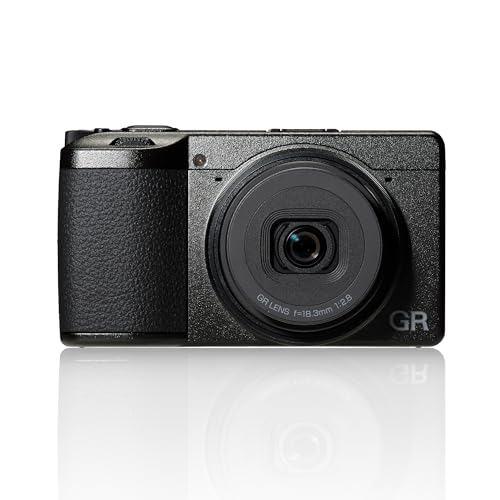 RICOH GR IV Premium Digital Compact Camera
- 25.7MP APS-C sensor in a 262g pocket body
- New 5-axis stabilization makes handheld night shots routine
- 53GB internal storage as a card backstop
- Snap focus remains the fastest street tool ever
- Sold first-party by Amazon at list price
- No weather sealing or built-in flash
- Fixed screen struggles in direct sun
- Deliberate autofocus and 1080p-only video
- Roughly 250-shot battery life
The GR IV is what happens when a cult camera gets a careful engineering pass instead of a reinvention. A new 25.7MP APS-C sensor sits behind the redesigned 28mm-equivalent f/2.8 lens, 5-axis stabilization now makes handheld night frames routine, and 53GB of internal storage means the camera works even when you forget a card. At 262g it disappears into a coat pocket, starts in under a second, and its snap-focus mode remains the fastest street-photography tool ever put in a compact. TechRadar’s review sums up the appeal: image quality that embarrasses phones, in a body no bigger than one.
It is a specialist, and the specialist taxes apply. There is no weather sealing and no built-in flash, the fixed screen fights you in direct sun, autofocus is deliberate rather than sporty, and video tops out at 1080p — Ricoh barely pretends otherwise. Battery life of roughly 250 frames means a spare in the other pocket. Amazon sells it first-party at list price, which in 2026 counts as a small miracle; the X100VI, its obvious rival, is scalper-only territory on Amazon right now and stays off this list.
Sony RX10 V — Best All-in-One Superzoom
 Sony RX10 V Premium 25x high-Zoom Camera with 24 600mm F2.4-4 Super-telephoto Lens, 20.1 MP Stacked Backside-Illuminated Sensor, AI-Based autofocus, up to 30 fps Burst Shooting
- Zeiss 24-600mm f/2.4-4 zoom covers everything without lens changes
- AI recognition AF tracks people, animals, birds and vehicles
- 30fps bursts with 60 AF/AE calculations per second
- 4K120 video with 5x slow motion
- Sold first-party by Amazon
- Sensor carried over from the 2017 model
- Weighs about 1.1kg
- Launch price landed well above the old RX10 IV
Nine years after the RX10 IV became the default recommendation for one-camera travelers, Sony finally shipped the fifth generation in August 2026. The formula is intact — a 20.1MP 1-inch stacked sensor behind a Zeiss 24-600mm f/2.4-4 zoom — but the brains are new: the AI recognition processor from the current Alpha line now tracks people, animals, birds, insects, cars, trains and planes, bursts run to 30fps with AF/AE calculations at 60 per second, and video reaches 4K120. Per Sony’s announcement, it is aimed squarely at travel, wildlife and youth-sports shooters who want zero lens-changing, and nothing else on the market touches that 25x reach with this autofocus. Pair it with a fast SD card from our memory card guide and it covers a safari alone.
Clear eyes on the compromises: the sensor is carried over from the 2017 model — PhotoWorkout made exactly that point at launch — so low-light ceilings and file flexibility trail every interchangeable-lens pick here; it weighs about 1.1kg; and the launch price landed roughly $600 above the old model’s. Amazon stocks it first-party, and early demand makes this a listing to buy when you see it.
Nikon Z8 — Best for Wildlife & Sports Pros
 Nikon Z 8 | Professional Full-Frame mirrorless Stills/Video Hybrid Camera | Nikon USA Model
- Z9 flagship sensor and processor in a 30% smaller body
- Fully electronic shutter with 20fps RAW bursts
- 3D-tracking autofocus excels on wildlife
- 8K60 RAW video headroom
- 120fps 11MP mode for decisive moments
- Still a big, 910g body
- Heavy battery draw on long sessions, so carry spares
- Amazon stock now flows through third-party dealers
For working wildlife and sports shooters, the Z8 is the sanest flagship money in 2026. It is the Z9’s 45.7MP stacked sensor and processor in a 30-percent-smaller body: a fully electronic shutter with no mechanical parts to wear, 20fps RAW bursts (120fps at 11MP when the moment is everything), 3D-tracking autofocus that Amateur Photographer’s guide singles out for wildlife, and 8K60 RAW video as a bonus for documentary work. Rolling shutter is a non-issue at this readout speed, and the deep Z-mount telephoto line — plus adapted F-mount glass — completes the kit. Engadget’s premium runner-up verdict says it plainly: Z9 specs for a lot less money.
Plan around three things our team hears from owners: it is still a big, 910g body that dwarfs everything else on this list; battery consumption under the always-on electronic viewfinder is heavy on long hides, so carry two spares; and Amazon stock now flows through third-party dealers — our verified listing from Deals All Year Camera Store showed healthy stock with more inbound, but check the seller line before paying flagship money. A tripod that can hold a 600mm lens matters too; see our The 5 Best Tripods for Photography (2026).
Canon EOS R5 Mark II — Best Pro Hybrid
 Canon EOS R5 Mark II Body
Back to the mirrorless market, a strong case can be made for the Canon EOS R5 Mk II as the best camera for photography professionals. Staffers view the mirrorless, in-body stabilized marvel as a well-balanced Canon machine. Its capabilities as a powerful motion picture camera are, to say the least, outstanding.
- 45MP stacked sensor shoots 30fps blackout-free
- Eye Control autofocus picks subjects as you look
- 8K60 RAW and 4K120 video
- 8.5-stop stabilization
- Two years of firmware polish
- Heaviest 8K modes want the cooling-fan grip
- Older LP-E6 batteries throttle peak performance
- Holds its price stubbornly
The R5 Mark II remains the camera we point working professionals to when the brief says “everything, at the highest level.” The 45MP stacked sensor shoots 30fps blackout-free, Eye Control autofocus lets you pick a subject by looking at it, and video runs to 8K60 RAW with 4K120 for delivery work — with stabilization rated to 8.5 stops. Engadget’s 2026 guide still calls it Canon’s best camera in years and the top premium pick, and two years of firmware have polished the launch quirks. Weddings on Saturday, a commercial set on Monday, a magazine landscape on Wednesday: this body does not care.
The known costs, drawn from the long-term reviews our team follows: the heaviest 8K modes still ask for the cooling-fan grip on long takes, the new battery is a must for peak performance (older LP-E6 packs throttle it), and it holds its price stubbornly. Canon first-party stock has left Amazon like everyone else’s; our verified listing from Photo Savings sat slightly under list, but this is exactly the tier where checking the seller name — and warranty terms — before checkout matters most.
Nikon D850 — Best DSLR Holdout
 Nikon D850 FX-Format Digital SLR Camera Body
- 45.7MP files still hang with 2026 bodies
- Lag-free optical viewfinder
- 1,840-shot battery rating no mirrorless matches
- End-of-production pricing from a top-tier dealer
- F-mount used lens market is a bargain bin
- No subject-detection AF or in-body stabilization
- Slow live-view focusing
- Frozen F-mount future and shrinking service window
Every camera above is mirrorless, because that war is over — but one DSLR earned its slot anyway. The D850’s 45.7MP back-illuminated sensor still produces files that hang with 2026 bodies, the optical viewfinder shows the world with zero lag and zero battery anxiety, and the 1,840-shot CIPA rating remains a number no mirrorless camera on this list approaches. Nikon has ended production, which makes this the last call: our verified listing comes from Adorama — one of the two most reputable camera retailers in America — at a price well under what this body commanded for most of its life, and the used F-mount lens market is the biggest bargain bin in photography.
Buy it knowing exactly what it is. There is no subject-detection autofocus and no in-body stabilization; live-view focusing is slow, so it is a viewfinder camera or nothing; and the F-mount future is frozen — every dollar into new glass should acknowledge that. Service and parts windows will also shrink as the years pass. For deliberate shooters — landscape, studio, print work — none of that dims what is still one of the greatest cameras ever made.
What happened to our old picks
Thirteen cameras left this guide in the 2026 rebuild, and the reasons say a lot about buying gear on Amazon right now.
Discontinued and living on leftovers: The Canon EOS R (replaced by the R8 line back in 2023) survives as dealer leftovers priced above its old closeout; the Canon R3 was superseded by the R1 and its remaining listing is collector-priced; the Nikon Z7 II ended its run with no direct successor — the Z8 and Z5 II absorbed its audience; and the Nikon D3500, discontinued in 2022, now asks more money than it cost new. The Sony A6000 — a 2014 camera — was listed at nearly double its original kit price, which is not a recommendation, it is a museum ticket.
Killed by the channel, not the camera: The Fujifilm X-S20 and X-T30 II are still fine cameras, but their Amazon listings decayed into marked-up or ships-in-a-week third-party offers, and the Sony A6400 and A7 III now sell above original list through gray-market sellers. Our rule from this year forward: if the listing cannot pass the seller test, the camera cannot hold a slot. The Leica Q2 Reporter fell the same way — one unit, one anonymous seller, one absurd price — and the Sony A9 III’s remaining offer sat well above MSRP; the Z8 now covers the speed brief. The Panasonic S5 II stays in the lineup, but we swapped its accessory-stuffed bundle listing for a clean body listing from an authorized dealer.
The shape-shifter: our old Nikon P1000 bundle listing quietly became a P1100 listing — same product page, different camera, a pattern we now check for on every update. The P1100 itself is fine if you find clean stock, but the new Sony RX10 V simply outclasses the bridge-camera category, so the superzoom slot changed hands. One more correction for the record: the previous edition’s “Sony A7R IV” section actually linked the standard A7 IV all along — the section above now says what it sells.
Still worth knowing (text-only mentions)
A few cameras earn a mention without a listing we can endorse. The Fujifilm X100VI is a wonderful camera that remains scalper bait on Amazon two years after launch — if you want one at list price, order from a retail camera store and wait. The Nikon Z50 II is Engadget’s top pick for most people and a genuinely excellent APS-C body, but its current Amazon offers come from sellers we could not vouch for; buy it retail with confidence. The Canon EOS R10 remains TechRadar’s beginner favorite — same story, thin dealer stock above launch price. And at the summit, the Sony A1 II, Canon R1 and Nikon Z9 are magnificent and largely pointless for anyone who has to ask; the Hasselblad X2D II 100C is the current image-quality king if money is a rounding error. Finally, the brand-new Sony A7R VI (66.8MP, announced this summer) will likely earn the high-resolution slot here once real stock stabilizes — early listings were preorder-only when we checked.
The buyer’s guide, 2026 edition
Camera type: the argument is settled
Mirrorless won. Every manufacturer’s development money now flows to mirrorless mounts, autofocus driven by machine-learning subject detection only exists there, and lens roadmaps for DSLR mounts are frozen. That does not make DSLRs bad — the D850 above proves otherwise, and the used market is stuffed with value — but a new buyer in 2026 should treat a DSLR as a deliberate, eyes-open choice, not a default. Bridge and compact cameras, left for dead five years ago, are quietly back: the RX10 V and GR IV exist because phones plateaued and people rediscovered zoom reach and pocketable sensors phones cannot fake.
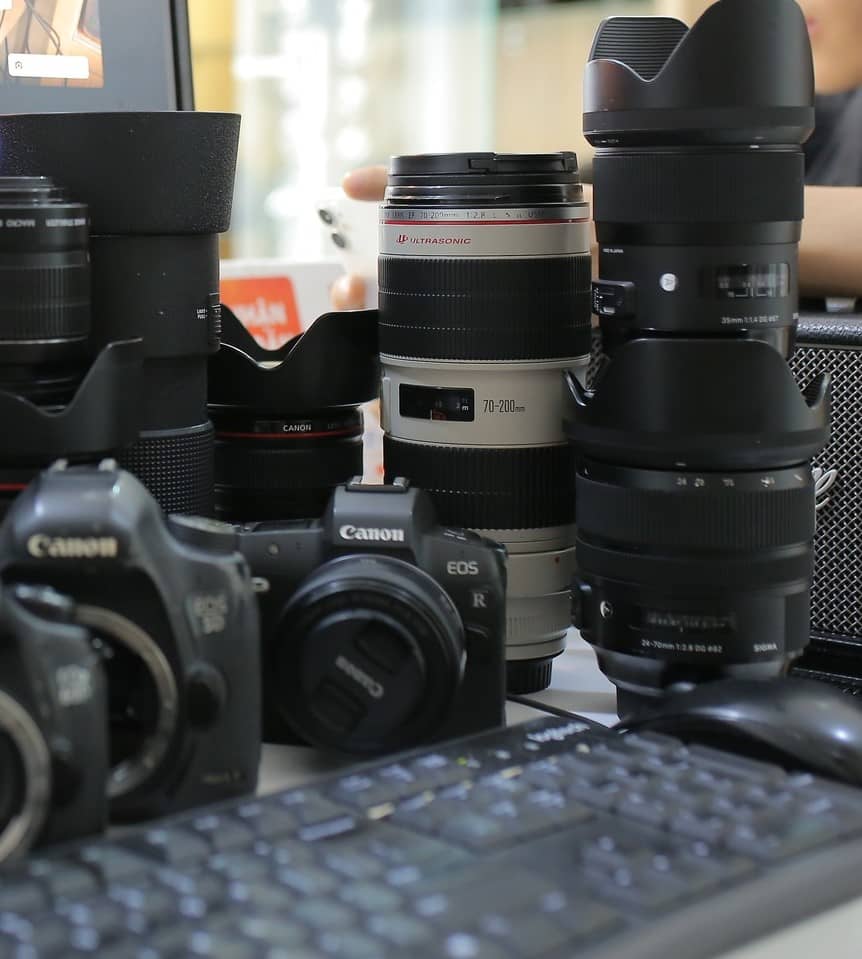
Sensor size: buy the biggest you will actually carry
The old hierarchy holds — full-frame beats APS-C beats Micro Four Thirds beats 1-inch for low light and shallow depth of field — but the gaps have narrowed as processing improved, and the best camera is still the one that leaves the house with you. A full-frame body you left home because it was heavy loses every time to the Micro Four Thirds kit in your bag or the GR IV in your pocket. Be honest about your carrying habits before you pay full-frame prices.

Megapixels: enough is enough
Twenty megapixels prints beautifully at 16×20; 24 to 33 is the modern sweet spot with room to crop; 40-plus is for landscape and commercial shooters who print big or crop hard, and it costs you in file sizes, card speeds and steadier technique. Do not pay for resolution you will never output — spend the difference on a better lens, which improves every photo you take.
Autofocus and stabilization: the real generation gap
The biggest practical difference between a 2020 camera and a 2026 camera is not image quality — it is autofocus that recognizes what it is looking at, and stabilization measured in the 7-to-8.5-stop range. If you shoot anything that moves, subject-detection autofocus is the single feature most worth paying for. If you shoot handheld in dim light, stabilization is. Battery life, by contrast, has broadly gotten worse since the DSLR era; check the CIPA number and assume a spare battery is part of the purchase price.
Where to put your money in 2026
Bodies depreciate; lenses hold. A modest body with an excellent lens out-shoots the reverse every single time. And this year, add one more rule that has nothing to do with optics: verify the seller. The manufacturer retreat from first-party Amazon stock means two listings for the same camera can differ by hundreds of dollars and by whether a US warranty exists at all. Every listing in this guide was checked against that standard on the date below — the price boxes are live, and if a box shows unavailable, the next authorized dealer or the brand’s own store is the safe fallback. For what to mount on the front of whatever you choose, our The 7 Best Lenses for Landscape Photography (2026) guide is the companion piece to this one.
The final frame
Strip away the spec sheets and the 2026 market gives photographers a clean set of answers. Most people wanting one serious camera for everything should buy the Sony A7 V and a good zoom, hybrid shooters splitting stills and video should take the Canon R6 Mark III, and the Nikon Z5 II delivers full-frame image quality for the price of an APS-C flagship. First camera ever? The R50 kit or the E-M10 Mark IV will not waste a dollar of your money. The specialists — GR IV in the pocket, RX10 V in the travel bag, Z8 in the hide, R5 Mark II on the commercial set, D850 for the believers — round out a list where, for the first time in years, every single pick is a camera we verified you can actually buy today.
Last updated: August 17, 2026 — full 2026 rebuild: lineup cut from 20 to 14 verified-in-stock picks, Sony A7 V/Canon R6 Mark III/Nikon Z5 II/Ricoh GR IV/Sony RX10 V and more added, dead and gray-market listings removed, live-price boxes and comparison table refreshed, buyer’s guide rewritten for the 2026 market.














![[Stand Up Desk Store] Crank Adjustable Sit to Stand Two-Tier Desk with Steel Frame Review](https://wfhworld.com/wp-content/uploads/2019/09/Standupdeskstore-100x70.jpg "Stand Up Desk Store Crank Two-Tier Review (2026): The Crank Desk That Endures")