

Straight to the verdict: the Nikon Z 14-24mm f/2.8 S is the best landscape lens money can buy in 2026, and Canon shooters get most of that magic for less weight with the RF 14-35mm f/4L IS. The Tamron 16-30mm f/2.8 G2 is the budget f/2.8 for both Sony E and Nikon Z mounts, Sony’s FE 16-25mm f/2.8 G is the compact native pick, the Nikon Z 24-120mm f/4 S is the one-lens travel kit, and a 70-200mm f/2.8 remains the quiet hero for layered mountain scenes. Two DSLR-era favorites survive at the bottom of the list.
|
Best Overall

|
Best Runner-Up

|
Best Budget

|
Best for Sony

|
|
$1,896.95
|
$1,399.00
|
$929.00
|
$1,298.00
|
An amateur photographer, someone still learning glass, rolls the dice and takes a dozen shots of a unique moment in the wilderness. The light is right, the camera is willing, yet the epicness of the scene stays just out of reach. The missing piece is almost never the body — it is a dedicated landscape lens.
A lot has changed since we first built this list. The market has finished its move to mirrorless: Canon RF, Nikon Z and Sony E glass now dominate the shelves, and the DSLR-era zooms we once led with are leaving Amazon listing by listing. For this 2026 update we re-verified every pick at its source and rebuilt the lineup around lenses you can actually buy today, with two honorable holdouts for DSLR shooters who aren’t ready to switch systems.
How We Picked the 2026 Lineup
Three filters shaped this list. First, availability: every ranked lens was checked in stock on Amazon on the day of this update, most of them first-party listings, because a recommendation you can’t buy is trivia. Second, verified optics: focal ranges, weights, stabilization figures and construction details below come from Nikon, Canon, Sony and Tamron’s own spec sheets, not from memory. Third, the wide end wins: for sweeping vistas the 14-35mm territory does the heavy lifting, so that’s where five of our seven picks live — with a versatile mid-range zoom and a telephoto rounding out the kit bag.
Nikon Z 14-24mm f/2.8 S — Best Overall
Nikon NIKKOR Z 14-24mm f/2.8 S | Professional Large Aperture Wide-Angle Zoom Lens for Z Series mirrorless Cameras | Nikon USA Model
- Class-leading sharpness in a 650 g pro f/2.8 ultra-wide
- Takes 112mm screw-in filters plus rear gels - rare at 14mm
- Nano Crystal + ARNEO coatings kill flare and ghosting
- Focuses to 0.28 m at every focal length
- 112mm filters are a pricey, niche size
- No in-lens VR - pair with an IBIS body
- Pro-tier price
Photography Life calls this “one of the best lenses ever made,” and our team has found no reason to argue. Nikon squeezed a 14-24mm f/2.8 pro zoom into 23 oz (650 g) — featherweight for the class — with 16 elements in 11 groups, Nano Crystal and ARNEO coatings against flare, and a 9-blade aperture that renders clean sunstars when you stop down over a ridge line.
Two details make it a landscape specialist rather than just a spec sheet. It focuses down to 0.92 ft (0.28 m) at every zoom position, so foreground wildflowers stay razor-sharp inside a grand composition. And unlike most bulb-fronted ultra-wides, it actually accepts filters two ways: 112mm screw-ins on the included hood, plus a rear slot for gel filters — long-exposure shooters, take note.
Trade-offs our team logs: those 112mm filters are a niche size with a matching price tag, so budget for glass on both ends. There is no in-lens VR — Nikon leans on in-body stabilization here, which every full-frame Z body provides but crop bodies mostly don’t. And the sticker is unapologetically pro-tier; if that stings, keep reading.
Canon RF 14-35mm f/4L IS USM — Best Runner-Up
Canon RF14-35mm F4 L is USM Lens, Wide-Angle Zoom Lens, Compatible with EOS R Series Mirrorless Cameras, Black
- 14-35mm range with 5.5-stop IS (7 stops coordinated)
- Just 540 g with standard 77mm filters
- Weather-sealed L build; 0.2 m close focus
- Sharp across the frame once profiles apply
- Leans hard on digital correction - heavy RAW distortion at 14mm
- f/4 ceiling limits astro work
Canon’s landscape sweetheart takes the opposite path: a wider 14-35mm range at a constant f/4, in a 1.2 lb (540 g) weather-sealed L body that swallows ordinary 77mm filters. Optical IS is rated at 5.5 stops on its own and up to 7 stops coordinated with in-body stabilization on recent EOS R bodies — enough to hand-hold blue-hour frames that used to demand a tripod. It focuses to 7.9 in (0.2 m) at any focal length, and OpticalLimits rates the whole package Highly Recommended.
Where it gives ground: this is a digitally corrected design, and the RAW files show it — OpticalLimits measured roughly 5.3% barrel distortion and heavy vignetting at 14mm before the automatic profile cleans things up. Sharpness survives the correction, but purists who pixel-peep uncorrected RAWs should know how the sausage is made. The f/4 ceiling also rules it out as a serious astro lens; Canon’s RF 15-35mm f/2.8L exists for that money-no-object crowd.
Tamron 16-30mm f/2.8 Di III VXD G2 — Best Budget f/2.8 (Sony E & Nikon Z)
Tamron 16-30mm F/2.8 Di III VXD G2 for Sony E-Mount Full Frame and APS-C Mirrorless Cameras
- Constant f/2.8 for Sony E and Nikon Z at a value price
- 440 g, 67mm filters, USB-C port, leak-resistant seals
- Excellent 16mm corner sharpness; fast VXD focus
- Soft at 30mm f/2.8 - stop down to f/5.6
- Control rings feel light; Amazon stock runs thin
The newest lens on this list completes Tamron’s G2 “trinity” and quietly retires the beloved 17-28mm f/2.8 by stretching both ends of the range. You get a constant f/2.8 in a 15.5 oz (440 g), leak-resistant barrel with 67mm filters, Tamron’s fast VXD linear motor, and a USB-C port for firmware updates straight from your laptop. PetaPixel’s review praised the corner detail at 16mm — exactly the end landscape shooters live at — and it ships in both Sony E and Nikon Z mounts, making it the rare budget ultra-wide that serves two systems.
Weak spots owners flag: the 30mm end goes noticeably dreamy at f/2.8 and wants f/5.6 before corners tighten up, the control rings feel lighter than the Sony and Nikon glass above, and close-up magnification is modest. One more practical note: Amazon stock comes through camera dealers in small batches, so the live box below is worth a glance — if it shows only a unit or two left, that is the listing breathing, not a discontinuation.
Sony FE 16-25mm f/2.8 G — Best for Sony Shooters Traveling Light
Sony FE 16-25mm f/2.8 G Lens
- One of the smallest full-frame f/2.8 wide zooms at 409 g
- Strikingly sharp wide open; 11-blade aperture
- Sealed build with clicked/de-clicked aperture ring
- No optical stabilization - IBIS only
- Tight 16-25mm range forces lens swaps
- Costs about double the third-party rivals
Sony’s answer to “I want f/2.8 but I hike” is this 14.4 oz (409 g) wide zoom — one of the smallest full-frame f/2.8 ultra-wides ever made, with 67mm filters, an 11-blade rounded aperture, dust and moisture resistance and a clicked/de-clicked aperture ring. Amateur Photographer’s review found it “strikingly sharp” wide open even on high-resolution bodies and scored it 4.5 stars. On an a7C-series body it makes a genuinely pocketable landscape kit that embarrasses tripod-bound setups twice its weight.
The honest asterisks: there is no optical stabilization in the lens, so you are leaning on your body’s IBIS; the 16-25mm range is tight and will force lens swaps the 16-35mm crowd never thinks about; and it costs roughly double what third-party f/2.8 ultra-wides ask. It earns that gap with build and rendering — but the Tamron above is the value answer if the math bothers you.
Nikon Z 24-120mm f/4 S — Best One-Lens Travel Kit
 Nikon NIKKOR Z 24-120mm f/4 S | Premium Constant Aperture All-in-one Zoom Lens for Z Series mirrorless Cameras (Wide Angle to telephoto) | Nikon USA Model
- 5x zoom covers 24-120mm in one 630 g lens
- 0.39x close focus for foreground detail
- S-line coatings; consistent cross-frame sharpness
- No in-lens VR - relies on body stabilization
- Barrel extends when zooming; f/4 caps low light
Ask working landscape photographers what actually stays on their Z bodies and this 5x zoom comes up constantly — Photography Life calls it a “nearly perfect midrange zoom.” The 22.2 oz (630 g) S-line build covers 24mm vistas through 120mm compressed ridgelines without a lens change, focuses to 1.15 ft (0.35 m) with a genuinely useful 0.39x reproduction ratio for moss, ice and foreground textures, and carries the same Nano Crystal, ARNEO and fluorine coatings as Nikon’s flagship glass. For travel days when one lens must do everything, this is the one.
What our experts would tell a friend: there is no VR in the lens, so pair it with an IBIS-equipped full-frame body rather than a crop Z camera; the barrel extends as you zoom, which bothers gimbal users more than hikers; and f/4 means it hands night-sky duty to a faster prime. None of that dents its day job.
Nikon Z 70-200mm f/2.8 VR S — Best Telephoto for Compression
 Nikon NIKKOR Z 70-200mm f/2.8 S | Professional large aperture telephoto zoom lens for Z series mirrorless cameras | Nikon USA Model
- Outstanding full-frame sharpness
- Near-total distortion elimination
- In-lens Nikon VR stabilization
- Quiet, precise stepper motor
- Hefty on compact mirrorless bodies
The unsung hero of landscape work is a telephoto: stacked ridgelines, alpenglow on a distant face, that layered look wide angles physically cannot produce. Nikon’s Z 70-200mm f/2.8 VR S remains best-in-class for it — 21 elements in 18 groups with aspherical and short-wavelength refractive optics that all but eliminate distortion and chromatic aberration, driven by a quiet, precise stepper motor with in-lens VR that wide Z primes skip. Detail holds corner to corner at every distance we have pointed it at.
Its enduring dings: the heft is real, especially balanced against a compact mirrorless body, and the price sits firmly in pro territory. One update for DSLR readers — the F-mount AF-S 70-200mm f/2.8E FL ED VR we used to point you toward has been wound down along with the rest of Nikon’s F-mount line, so the used market is now the route to that particular classic.
Canon EF 16-35mm f/4L IS USM — Best for DSLR Holdouts
 Canon EF 16-35mm f/4L IS USM Lens - 9518B002, Black
The USM acronym stands for ultrasonic motor, the IS for image stabilization, and everything else on this environment-resistant optics package stands for quality. Sold for a budget-stunning, the lens isn’t cheap, but it will earn its place as your optics-of-choice when you’re out and about, looking for that perfect golden hour shot.
- Smooth autofocus, responsive stabilization
- f/4 aperture drinks in evening light
- Three aspherical elements cut distortion
- Durable, quality build
- EF future means used-market bodies
- Price has crept up as EF supply tightens
- None of the mirrorless-era AF or correction perks
A survivor from the original version of this article, and deservedly so: Digital Camera World still names it the best Canon DSLR landscape lens in 2026, and unlike most EF glass it remains first-party stocked on Amazon. Material quality and design durability partner with smooth autofocus and a 4-stop image stabilizer, while three aspherical elements keep chromatic aberration and distortion in check across the frame. Every ridge line, every branch and leaf, stays consistently sharp — a superb f/4 aperture drinking in that low evening light.
Eyes-open caveats: this is a 2014 design riding out the DSLR sunset, so buying in means committing to the used market for your next body; its asking price has actually crept upward over the years as EF supply tightens; and you give up the coordinated-IS and correction tricks the RF 14-35mm above inherits. For 5D and 6D loyalists, though, it is still the one to own.
What Happened to Our Old Picks
Five lenses from the previous version of this guide fell to the mirrorless transition, and the pattern is worth a paragraph: DSLR glass is not being discontinued with press releases, it is quietly bleeding out of first-party stock into thin third-party listings at drifting prices.
Nikon AF-S NIKKOR 24-70mm f/2.8E ED VR — down to a handful of dealer units on Amazon as F-mount winds down. Our mid-range slot now belongs to the Z 24-120mm f/4 S, which out-ranges it at half the weight.
Sony FE 12-24mm f/2.8 GM — still a spectacular specialist, but Sony’s first-party channel has left this Amazon listing behind and the remaining third-party offers price well above list. The same is true of the 16-35mm GM II, which is why our Sony pick is the 16-25mm f/2.8 G. If you need 12mm, buy direct from Sony or a major camera retailer.
Canon EF 70-200mm f/2.8L IS III USM — the listing has gone soft: no first-party stock and multi-day third-party shipping. The RF 70-200mm took its shelf space, and EF telephoto shooters are better served on the used market.
Sigma 14-24mm f/2.8 DG DN Art — the bundle listing we linked has died outright, and bare-lens listings sit with third-party sellers above list price. The lens itself remains a landscape-astro favorite; buy it direct from Sigma or an authorized dealer rather than through inflated marketplace offers.
Nikon AF-S NIKKOR 16-35mm f/4G ED VR — the old intro’s Nikon DSLR suggestion is still buyable through camera-store sellers and remains Digital Camera World’s F-mount landscape pick, so consider it the Nikon mirror-image of our Canon EF holdout above.
Choosing The Perfect Lens for Your Landscape Shoots
Interchangeable high-end glass is a costly investment, which is why we took on the testing burden — so you can focus on the one lens that suits your unique needs.
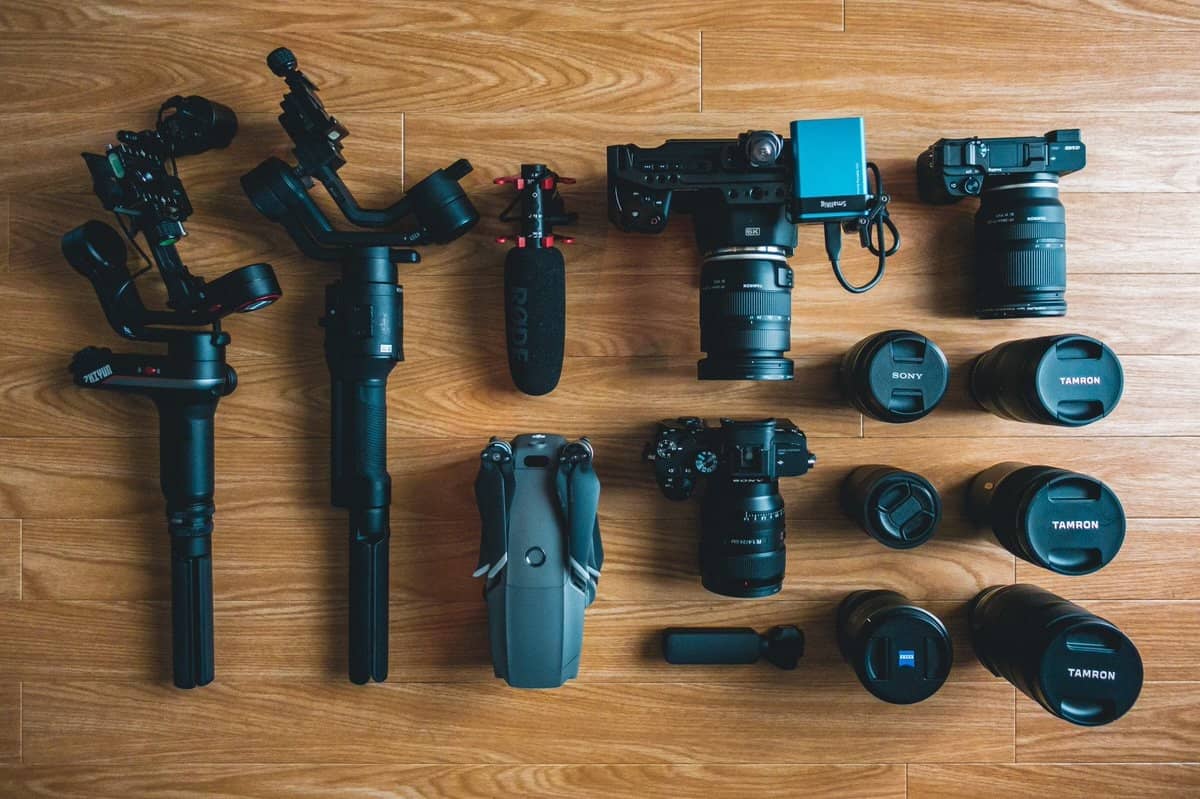
Canon, Nikon and Sony first-party lenses still earn their ranking — they pair with camera-specific focus and correction systems third parties can only approximate. But 2026’s third-party glass is no compromise: Tamron’s G2 line proves it above, and Sigma’s Art series remains superb where you can buy it sensibly. And should the budget refuse to stretch at all, the second-hand market for last-generation DSLR glass has never been richer.
If forced to choose one lens, make it a wide zoom in the 14-35mm neighborhood — it pulls in the grand panoramic view that defines the genre, and you can save toward a telephoto later, filling out your armory with long-distance compression strength.
Heading out to a national park or a glorious vantage point in another state, we wish you all the very best in your coming outdoor adventures. Luck won’t be an issue — not with one of these landscape lenses in your equipment bag.
- Related post: The 14 Best Cameras for Photography (2026)
- Related post: The 5 Best Tripods for Photography (2026)
- Related post: The 6 Best Memory Cards for Your Camera (2026)
Last updated: August 16, 2026 — full 2026 re-lineup: five new mirrorless-era picks verified in stock, two DSLR-era favorites retained, and a rebuilt comparison table with live pricing.