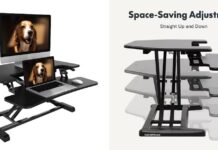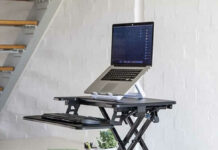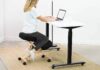

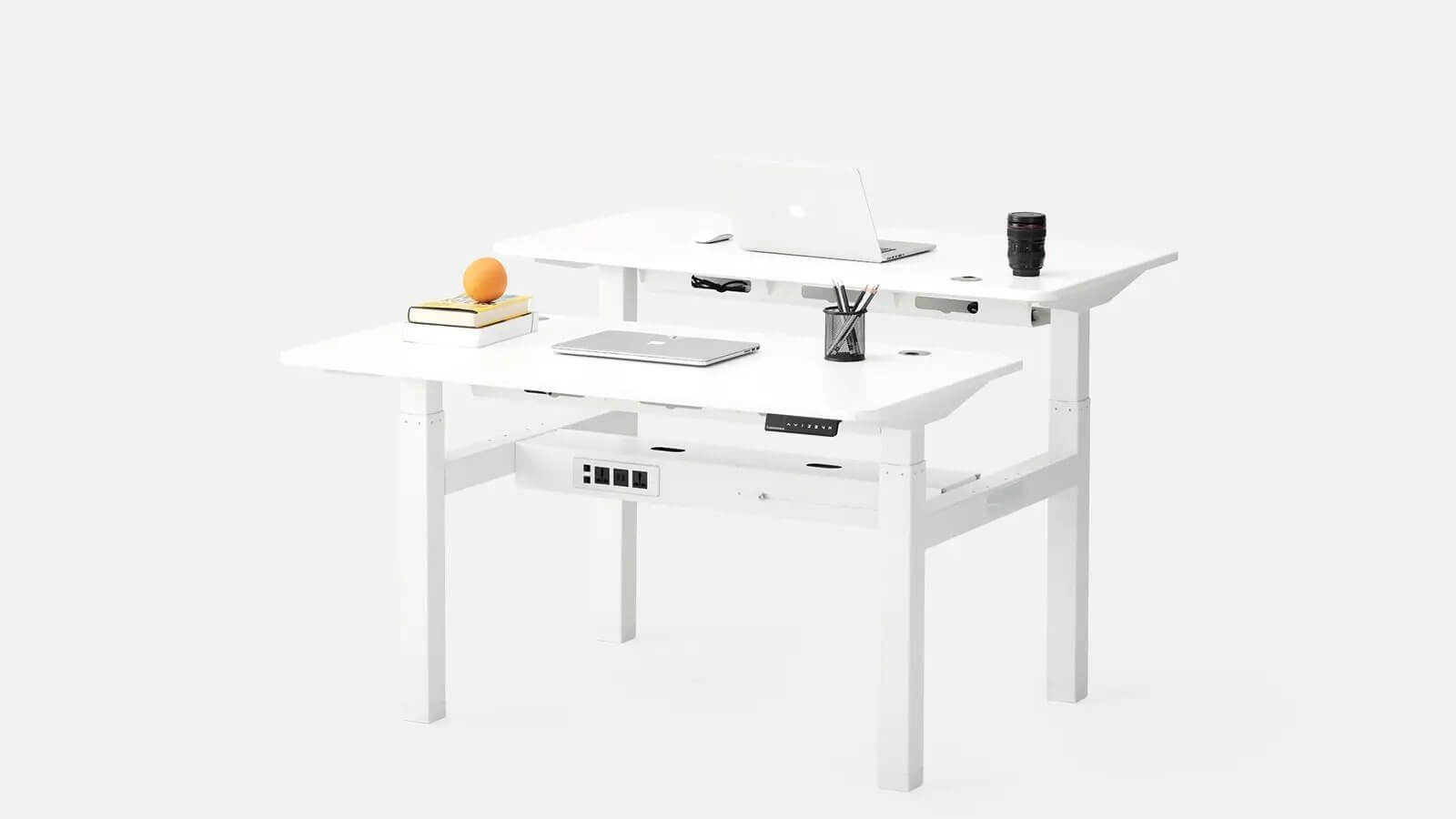
The double standing desk is the office-planner’s cheat code: two connected sit-stand workstations with independent controls, sharing one footprint. Autonomous’s take on it — sold direct at autonomous.ai, like the rest of the brand’s catalog — remains one of the cheapest ways to seat a pair of collaborators. Our review, re-verified for 2026: where it earns its price, where the price shows, and the alternatives worth cross-shopping.
About the brand
Autonomous desks are built in China, and the motor story matters: the brand started on the same Jiecang bases that powered Jarvis and UPLIFT, hit reliability trouble, and switched to TiMotion — another Chinese-made system that resolved the safety issues of the SmartDesk 1 era. Jiecang has since improved its own product (today’s Jarvis and UPLIFT run the refined version), so in practice the stability gap between the motor camps has largely closed. Autonomous’s card has always been price, not pedigree — our Jarvis vs SmartDesk comparison maps that trade in detail.
The good of the Autonomous double standing desk
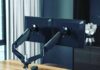
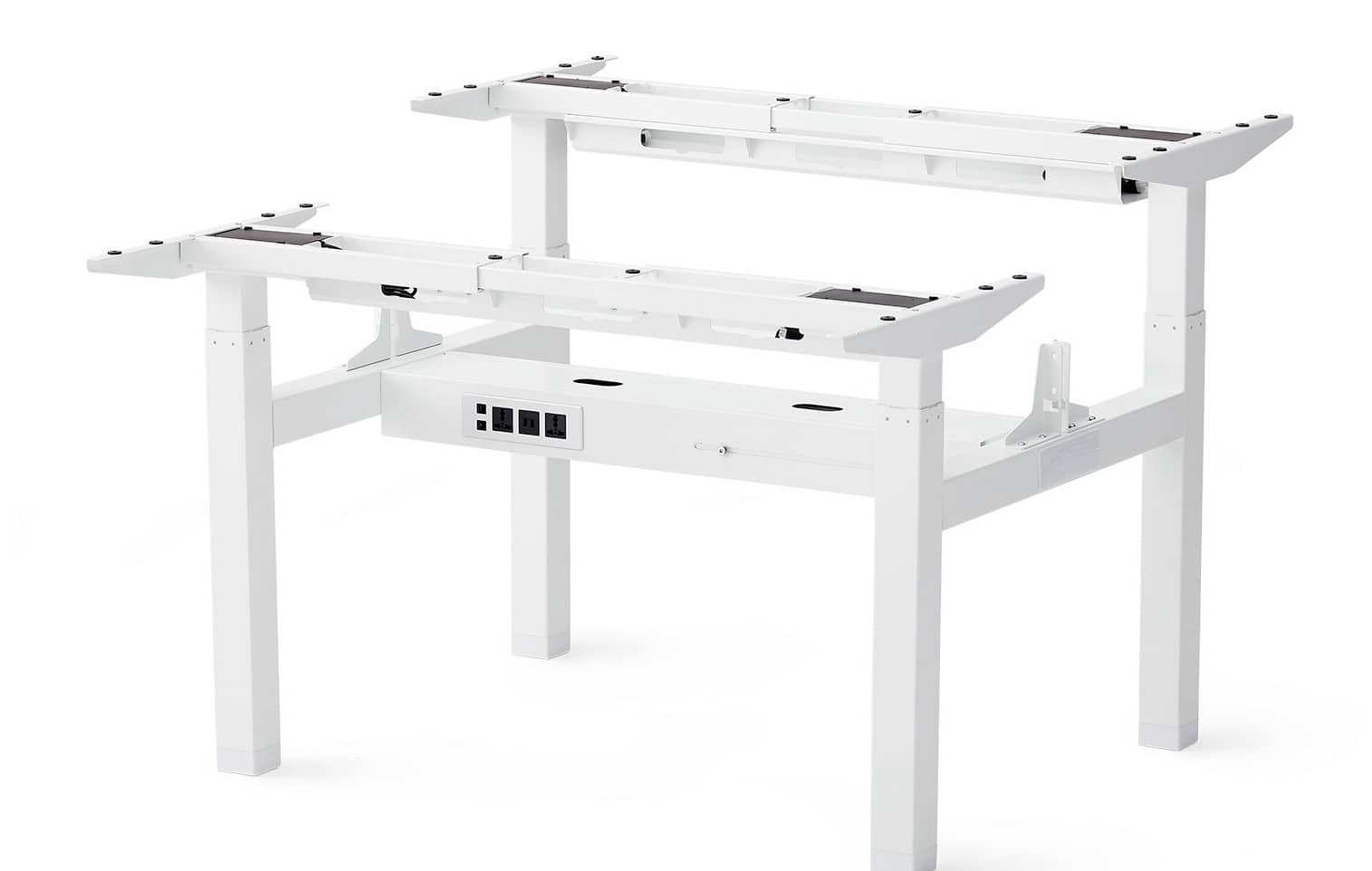
Two frames joined by a solid central beam, each with its own supporting bars, dual motors, control panel, and four memory presets — so either side adjusts independently, which is the make-or-break spec for any double desk. The connecting beam earns its keep with built-in ports for charging and connecting gadgets.
Three things carry the recommendation. It’s genuinely great for collaborative work — teammates share a station while each stands or sits at their own height. The joined layout saves serious floor space against two separate desks, which is the whole pitch for growing offices in small rooms. And it’s among the cheapest ways into a two-person sit-stand setup anywhere — the reason buyers forgive its rough edges.
The not so good
The desk is hefty, and joining two frames mid-assembly is genuinely awkward solo — recruit a second pair of hands. The instruction manual needs the overhaul we asked for years ago: steps missing, sequences unclear, and the most useful guides remain YouTube videos (mostly the brand’s own — independent coverage of this model stays thin). Budget honestly: the brand says an hour; reality is three to four, longer alone. The assembly burden is no accident — it’s part of how the price stays this low, so if complex DIY isn’t your idea of a Saturday, this isn’t your desk.
Stability, the perennial Autonomous question: the TiMotion switch fixed the safety story, and the supporting bars damp things at working heights, but a pronounced shake remains at the top of the range. Average-height users will rarely meet it; tall users who stand at maximum extension will.
Alternatives to the double desk
Oblique Adapt. The closest lookalike — two independent frames on a shared beam, dual motors per side, and a BOSCH motor (the same family the IKEA BEKANT used). Better motor pedigree than the budget Chinese bases, though it too wobbles at full height; a hand-crank option exists for the electricity-averse.
Unite Plus Twin. Each desk gets its own control panel and cable management, and the pair works as one large leveled surface or two independent heights — with a wide 25-to-49-inch range that covers short through tall.
Herman Miller Nevi Link. The premium answer: a modular system rather than a single product, configurable as back-to-back rectangles or the handsome 120-degree three-desk bench. Herman Miller stability, Herman Miller options, Herman Miller invoice — for offices where the double desk is infrastructure, not an experiment.
Why use a double desk for your office
Three durable arguments. Space: more workstations per square foot than any separate-desk layout can manage. Collaboration: pitching, pairing, and brainstorming across a shared surface beats commuting between cubicles — it’s why agencies and marketing teams love the format. Atmosphere: shared desks build camaraderie that cubicle walls quietly tax — and when someone needs deep-focus solitude, a desk divider screen restores privacy on demand.
Final say
The Autonomous double desk maximizes office space and team speed at a price nothing comparable touches — provided you accept the assembly marathon and the top-of-range wobble. The non-negotiable when shopping this category, from Autonomous or anyone else: each side must have its own motor and its own controls. Independent adjustment is what makes a double desk two workstations instead of one compromise. (More from the brand’s bench: our SmartDesk 2 review.)
Last updated: August 30, 2026 — full 2026 refresh: review re-verified, direct-only purchase noted, alternatives updated, original imagery retained.