
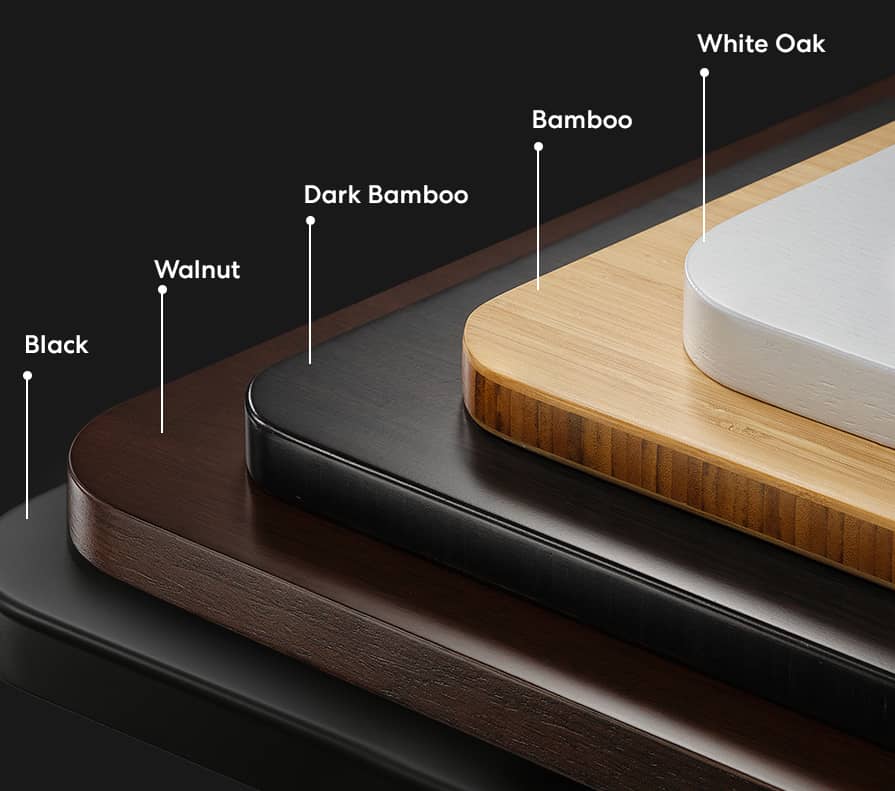
The motor gets all the attention, but the tabletop is the part of a standing desk you actually touch all day — every keystroke, every coffee ring, every decade of ownership happens on it. This guide, re-checked for 2026, walks every material the market offers, from heirloom hardwoods to honest laminates, so you can match the surface to your budget and your patience for upkeep.
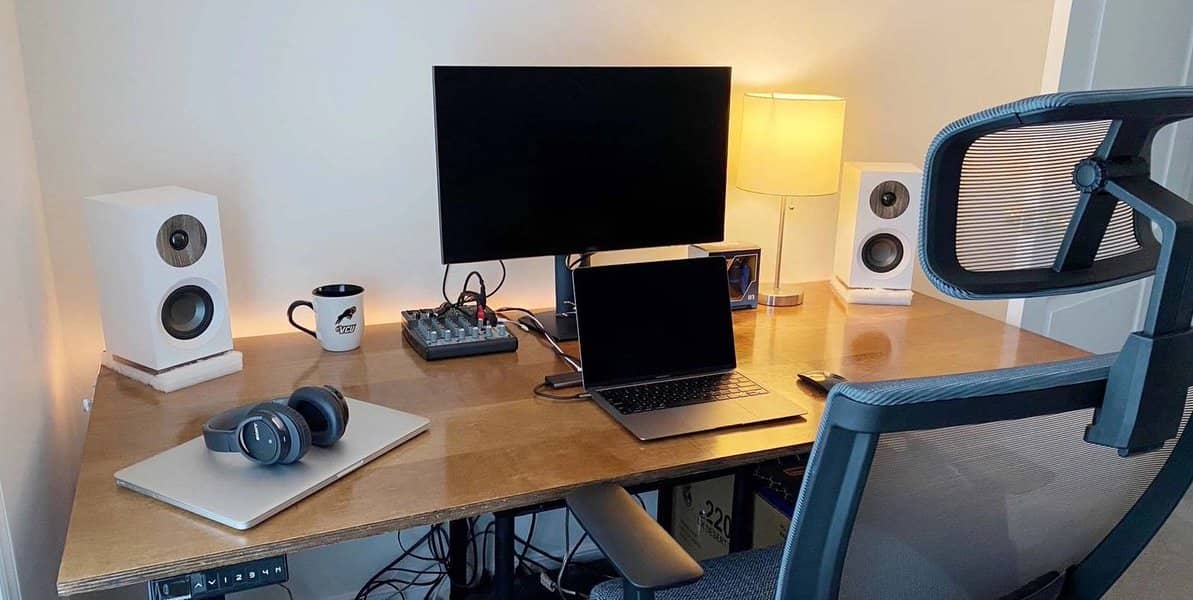
Different types of desktop materials
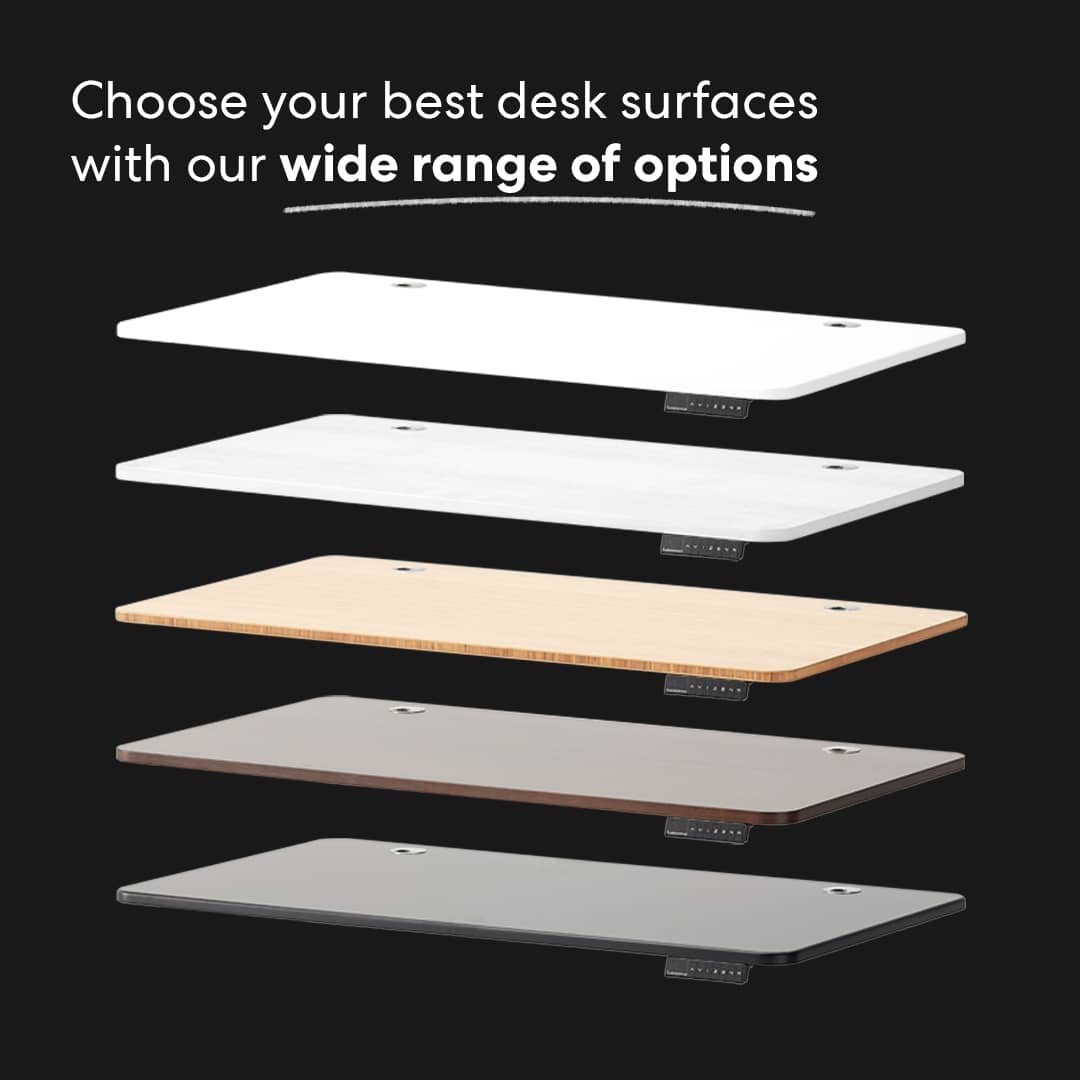
Natural wood
Most people would probably love solid wood for their desk — and depending on the tree, each species presents a distinct charm, an extension of the rustic outdoors brought inside. Here’s the field guide.
- Cherry wood
Cherry evokes sophistication: deep reddish-brown or light brown, with a distinctive grain that announces its price bracket from across the room. Its special trick is aging with grace — the color deepens and defines itself over the years, which is why it’s been the elite’s pick since roughly the middle ages, its market standing never really wavering. The honest downsides: genuinely expensive, and that deep tint can darken a room.
- Maple wood
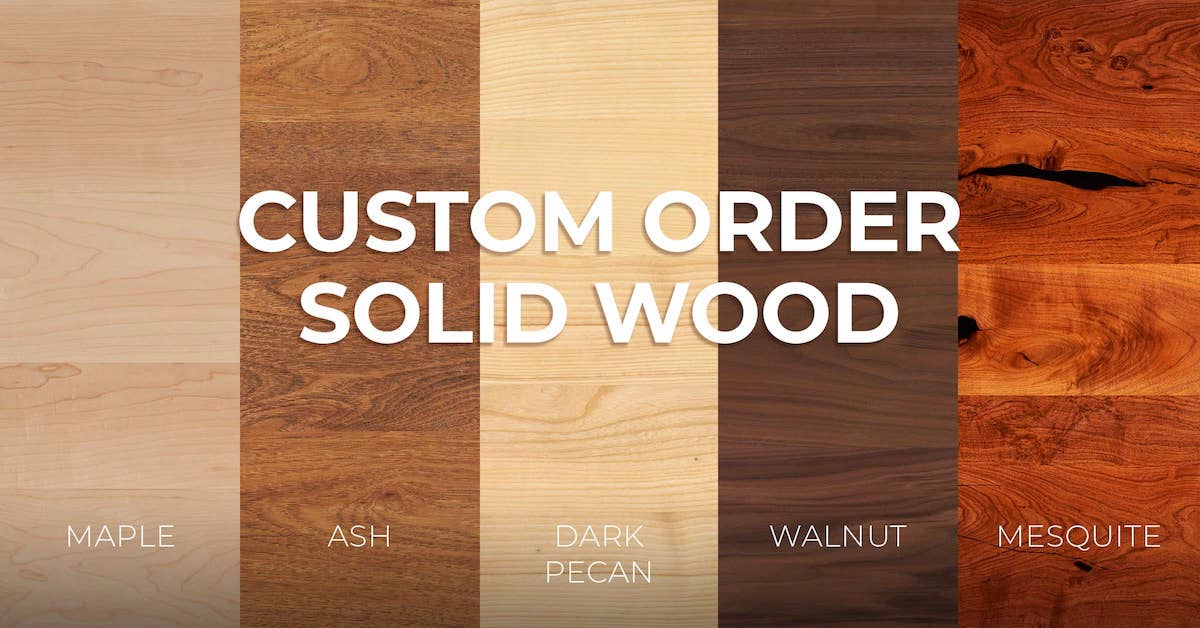
Maple runs light brown to a subtler red-brown than cherry, and its signature is the dense, varied grain — straight, wavy, curled, even bird’s-eye — that makes each board a small surprise. It’s moisture resistant, lasts for years, and takes stain so well it’s routinely dressed up to impersonate pricier cherry or mahogany. Among hardwoods, it’s one of the friendlier price tags — the sensible person’s heirloom.
- Ashwood
Ash is the light-colored economist of the hardwood family: the easiest to shape and machine, which keeps construction costs down, yet still strong lumber. Where most hardwoods whisper “rustic vintage,” ash reads modern and minimalist — the solid-wood option for people whose homes don’t do farmhouse.
- Black walnut wood
The king of demand. Walnut’s dark hue only gets lovelier with staining, and like ash it machines easily — but that popularity keeps the price ridiculous, making it one of the most expensive hardwoods still in regular production. You’re paying for the color, and the color is worth it.
Rosewood
Rosewood — deep brown to red-brown like cherry, sometimes with a purplish cast depending on variety and age — is the cautionary tale of this guide. Demand (particularly a spike in China) pushed the species toward extinction, and since 2017 international restrictions have clamped down on harvesting it. Genuine rosewood furniture is antique-market territory now, sourced historically from China, Thailand, and Africa. The practical advice: if you see a “rosewood” desktop at a normal price, it isn’t rosewood — and if it’s real, it will cost accordingly.
Oakwood
Oak wears a distinct light-blonde brown with a bold grain, and its ubiquity is earned: heavy but easy to cut, available in a huge variety of finishes, and comfortable in nearly any design language. The default hardwood for good reason.
- Mahogany
Mahogany sits with cherry in the premium tier — classy, dark brown to reddish, unmistakably expensive. It’s also the diva of the group: high maintenance, harboring dust and demanding regular upkeep. Budget time along with money.
- Bamboo
Technically a grass, practically a superpower. Bamboo takes wear and tear seriously — chemical-free boards run several times sturdier than comparable wood — while staying lightweight, and it shrugs at humidity, dry air, and temperature swings that crack lesser tops. It resists scratches, water, and insects (termites won’t even nibble), and needs essentially no upkeep to keep its lovely finish. That combination is exactly why bamboo tops dominate the standing-desk market right now: it’s the natural-wood look without the natural-wood chores.
- Pine
Pine is the light, lightweight, affordable entry — with softwood honesty: it dents and shows wear early. In exchange you get shock absorption and the most barn-like, rustic aura on this list. Fine for a budget build; just expect character marks.
Solid wood, in practice. A quality solid or solid-surface board gives you the warmth of real wood with stable strength, minimal reaction to environmental changes, and little tendency to warp or crack. A good example still in stock: the VWINDESK 72×30 solid bamboo top — a full inch thick, with 60mm grommets pre-cut for standing-desk frames.
How about solid wood texture? Some “solid texture” boards use a real-wood surface — nature’s grain on top — over an engineered core of poplar and eucalyptus layers. That lamination is actually more stable than straight-jointed solid wood: harder to crack, with better tensile behavior. Purists sniff; physics approves.
Compare the two popular materials for tabletops
| Material | Laminate | Solid Wood |
| Durability | Highly resistant to scratches, stains, and moisture | Durable and can last with proper care |
| Price | Less expensive | Typically more expensive |
| Aesthetics | Available in a variety of patterns and finishes, but may be less attractive than natural wood | Natural beauty with unique grain patterns, can be sanded and refinished |
One laminate-specific weakness worth knowing: the edge banding that covers the composite core’s exposed edges can peel or chip over time, dragging down the whole tabletop’s appearance until it’s repaired. Solid wood never has this problem — there’s nothing to peel; you sand and refinish instead.
Reclaimed wood
Reclaimed tops are solid hardwood planks recycled from buildings and furniture at least a decade old, joined into a desk that carries genuine history and that rustic, natural vibe — closer to antique than commodity. Two warnings, though. First, authenticity: unscrupulous manufacturers slap “reclaimed” on fresh pine and elm planks and sinker logs from industrial processing — if the price looks too friendly, that’s what you’re buying. Second, economics: real reclamation takes effort, cost, and time, so genuine reclaimed wood is neither cheap nor common, and whether it’s truly the eco-economical choice remains an open debate. Buy it for the story and the look, verified — not for the savings.
Laminated desks
Laminates are the budget realist’s category, and they come in several grades worth telling apart.
- Laminated desks
A protective layer — plastic, metal, vinyl wrap, or natural wood veneer, sometimes powder-coated — is pressed and bonded over a substrate, working like the clear laminate that protects paper. The substrate is usually MDF (medium-density fiberboard, made from recycled scrap wood), and MDF quality varies enormously: the heavier the board, the more wood it contains. That’s why a US-made MDF top and a bargain import can look identical and age completely differently — the light, cheap board simply isn’t durable. A quality laminate is the right call when solid wood isn’t in the budget: stain-, scratch-, and moisture-resistant with near-zero upkeep. Just weigh the board before you trust it.
- High-pressure laminated desk
Same idea, different coat: the MDF core wears melamine instead. The result resists stains, scratches, and moisture at a very cheap price — and feels like it, with that rubbery plastic touch and banded edges whose seams peel when scrubbed with harsh cleaners. It’s the fleet furniture of a thousand offices: not pretty, not durable, endlessly serviceable.
- Ergo contoured or 3D laminated desks
Here a laminate film wraps fully around the MDF — no edges, no banding, just rounded corners and a contoured, more pleasing shape. Expensive 3D laminates convincingly mimic hardwood, and the format offers wide color and wood-grain choices. This is the best-of-both answer: the look of solid wood without its upkeep or its invoice, and the reason 3D-laminate tops headline so many mid-range standing desks.
Fiberboard. Fine, uniform fibers pressed into a board with a smooth surface, often PVC-treated — dimensionally stable, unlikely to warp or crack, and easily formed into the curved, ergonomic front edges flat lumber can’t manage.
Chipboard. Small wood particles dried, glued, and pressed at high temperature — the entry rung of engineered boards. Fine under a good laminate skin; unremarkable without one.
Summary
The decision tree is mercifully short. Solid wood tops are exquisite and classical, at the cost of money and regular upkeep — and if you want the natural look without the maintenance contract, bamboo is the clear winner of the wood family. Laminates trade some beauty for near-total resistance to stains and scratches at a friendlier price — and 3D laminate is the next best thing to wood, delivering the hardwood look with neither the cost nor the care. Match the surface to your budget and your patience, bolt it to a good frame — our standing desk frame guide covers that half — and the desk underneath your work will be the one part of the setup you never think about again. Which is exactly what a great tabletop should be.
Last updated: August 30, 2026 — full 2026 refresh: material guide re-checked, bamboo pick re-verified in stock.