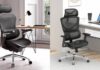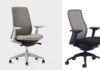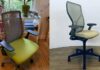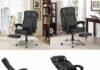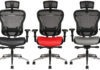


Side by side in a showroom, an ergonomic chair and a standard office chair can look like siblings. Eight working hours later they feel like different species — and the difference is measurable in adjustment points, not padding. Here’s our refreshed breakdown of what actually separates the two, and how to decide which your desk deserves.
Ergonomic vs standard: the real difference
A standard office chair is built to an average body and a price: fixed backrest shape, basic height lever, maybe a rocking tilt. It supports sitting the way a bench does — adequately, identically, for everyone. An ergonomic chair is built to adjust: seat height and depth, lumbar that moves to meet your spine’s curve, armrests that come to your elbows, recline that locks where your work wants it. The design goal is different in kind — a standard chair asks your body to fit the chair; an ergonomic chair fits itself to your body (the full feature anatomy lives in our defining-features guide).
The cost difference follows from the engineering: more mechanisms, better foam and mesh, longer warranties. But the gap has narrowed dramatically — genuinely adjustable chairs now start well under $200, which retired the old excuse that ergonomics is a luxury line item.
Key points to note before purchasing
Hours decide it. Two hours of email a day, and a standard chair is honest value. Six-plus hours, and the ergonomic chair stops being optional — long sitting is where fixed-shape chairs quietly tax the lower back and shoulders (the benefits rundown covers what proper support returns). Bodies off the average need adjustability most. Shorter, taller, or heavier users get the worst of one-size-fits-average seating — see our short-person guide and heavy-person spec guide. Total cost favors the better chair. Standard chairs are replaced on a two-to-three-year cycle as foam flattens; a well-made ergonomic chair with a real warranty runs a decade.
Important factors when buying the ergonomic one
Check the big five in person or in the spec sheet: seat-height range that fits your legs, seat depth (sliding, ideally), height-adjustable lumbar, adjustable arms, and a recline that locks. Then materials — breathable mesh or dense molded foam — and the warranty length, which is the manufacturer confessing how long the chair really lasts. The current verified shortlist lives in our under-$500 rankings.
The verdict
A standard chair is furniture; an ergonomic chair is equipment. If your workday lives at a desk, buy the equipment — your back pays the difference either way, and the chair is the cheaper place to spend it.
Last updated: August 23, 2026 — full 2026 refresh: comparison sharpened, price landscape updated, fit-guides linked, original photography retained.