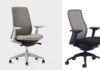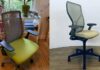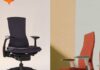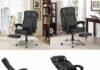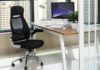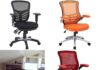

The real difference between an office chair and a gaming chair isn’t the shape — it’s the design brief. Office (task) chairs are engineered around posture for long focused work: breathable backs, deep adjustability, seats that disappear under you. Gaming chairs are engineered around a look and a lounge: racing buckets, big recline, headrest and lumbar pillows, statement colors. For eight-hour workdays, the ergonomic task chair wins on nearly every measure that matters; the gaming chair wins on recline, style, and the fact that you’ll actually want it on camera. Here’s the honest breakdown, 2026 edition.
What each chair optimizes for
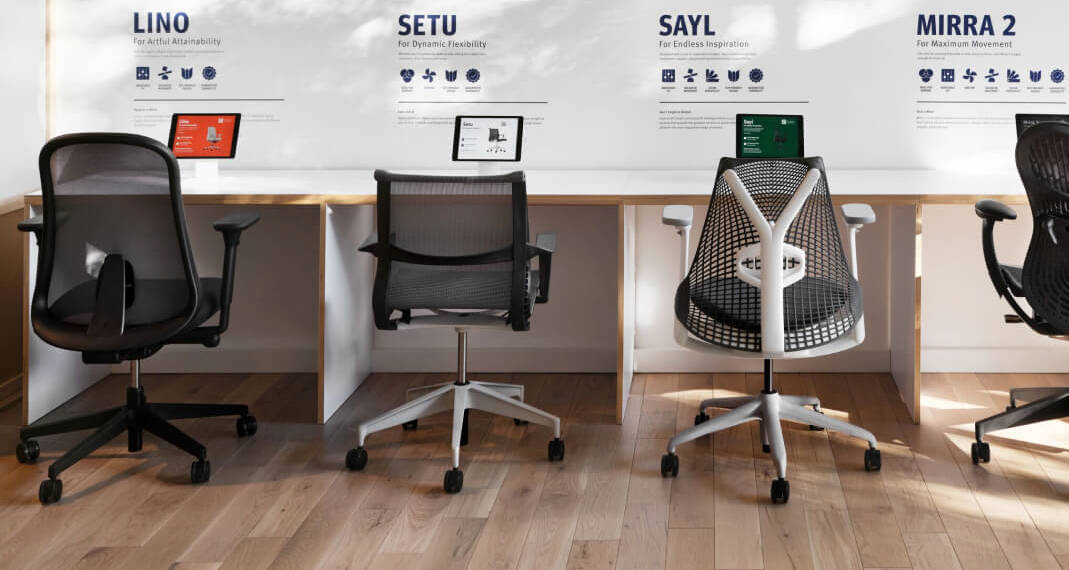
Task chairs spend their budget invisibly: adjustable seat depth, arms that move four ways, mesh that breathes through hour six, and tilt mechanics that support leaning forward to type — the posture work actually happens in. The best of them (Aeron, Gesture, Embody) are why our The 20 Best Office Chairs for Long Hours (2026) list is dominated by “boring” designs. Gaming chairs spend their budget visibly: bucket seats and wings borrowed from racing (where they exist to hold a body during cornering — your desk does not corner), 150-plus-degree recline for between-match lounging, bundled pillows of wildly varying quality, and PU leather that photographs great and breathes poorly. Neither brief is wrong; they’re just different products wearing the same word “chair.”
Where the gaming chair genuinely wins
Recline depth — most task chairs stop far short of a gaming chair’s near-flat lounge, and for console sessions or watch-along breaks that’s a real feature. Style, obviously: a stream backdrop or a teenager’s room often wants the look. Bundled extras at the price: headrest and lumbar cushions included, where task chairs sell support as trim levels. And the sub-$200 floor is friendlier — a decent budget gaming chair beats a terrible budget “executive” chair, which is why our budget picks span both camps in The 12 Best Budget Office Chairs under $500 for WFH (2026).
Where the task chair wins (which is most places)
Breathability: mesh versus PU leather is no contest across a summer workday. Forward-posture support: bucket wings block the arm movement typing and mousing want, and racing lumbar curves are shaped for reclined driving, not upright work. Adjustability depth: seat-depth sliders, genuinely useful arms, and tension tilt show up at mid-range task prices but stay rare in gaming chairs. Longevity: task-chair warranties run 10-plus years at the premium end; gaming chairs average two to five. If the chair’s job is work first, the task chair is the tool — the under-$200 proof being the Modway Articulate Review (2026): Still the Under-$200 Mesh Pick.
So which should you buy?
Work 6+ hours a day at this desk: task chair, full stop — spend on adjustability, not aesthetics. Game-heavy, work-light, camera-on: a quality gaming chair is a fair pick — choose one with a real warranty and adjustable (not just bundled-pillow) lumbar, per our gaming chair rankings. Split evenly: buy the task chair anyway — it games better than a gaming chair works. And whichever camp you choose, fit beats category: the sizing rules in our tall-user guide and short-user guide disqualify more chairs than any brand comparison.
Conclusion
An office chair is work equipment that happens to be furniture; a gaming chair is furniture that happens to hold you at a desk. Buy the one whose actual job matches your actual hours — and if you’re honest about those hours, most readers of this site need the task chair and want the gaming chair. Buy the need; the want passes.
Last updated: August 22, 2026 — full 2026 refresh: comparison rebuilt around design briefs with honest wins on both sides, dead product links retired, current chair guides linked throughout.












![[Stand Up Desk Store] Crank Adjustable Sit to Stand Two-Tier Desk with Steel Frame Review](https://wfhworld.com/wp-content/uploads/2019/09/Standupdeskstore-100x70.jpg "Stand Up Desk Store Crank Two-Tier Review (2026): The Crank Desk That Endures")