
Here’s a review with a plot twist built in: Loctek, the quiet monitor-mount specialist whose standing desks nobody reviewed, turned out to be the parent company behind FlexiSpot — the brand that now dominates the value standing-desk market. Our hands-on with the Loctek ET118, re-verified for 2026, reads today as an early look at that empire’s foundations — and as a guide for anyone who finds these desks still in circulation.
About the desk — and where the brand went
Loctek’s desk range was always compact: a handful of frames, single or dual motor, with tabletop options topped by the popular tempered glass. The ET118 we tested is the two-stage, single-motor centerpiece of that lineup. The 2026 context: Loctek Ergonomic focused its consumer energy into FlexiSpot, so today the company’s desks, converters, and mounts largely reach buyers wearing the FlexiSpot badge — our FlexiSpot converter review and E7 vs UPLIFT comparison cover the modern face of this machinery. Everything below explains why that machinery earned the promotion.
Customization options
Loctek’s build-your-own configurator offered real choice — model, frame, top, motor — behind a website that tested your patience: sparse descriptions, no model-vs-model comparisons, and a structure that assumed you already knew what you wanted. Combined with the near-total absence of third-party reviews, buying a Loctek desk always demanded homework. (The FlexiSpot storefronts that succeeded it are, mercifully, easier to shop.)
First impressions
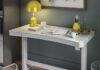
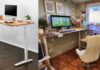
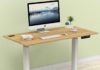
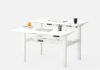
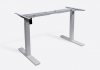
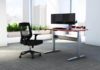
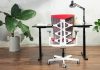
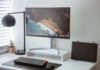
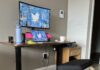
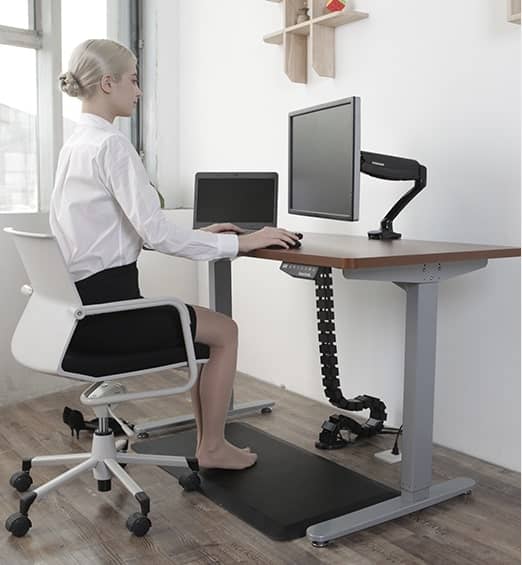
The base desk reads plain — until the tempered-glass top enters. Glass over a rectangular metal base with the control panel embedded flush, a closed storage compartment, USB ports, and programmable height presets: sleek, posh, and legitimately luxurious-feeling at its price. Our one design gripe was cohesion — the plain frame under that glamorous top — plus the parallel stabilizer bar on our chosen frame: positioned low enough to spare your knees, but a real constraint on legroom. (Loctek offered bar-free frames for those who minded.)
Stability and durability
The surprise that foreshadowed FlexiSpot’s rise: this desk is solid. Rocked side-to-side and front-to-back, it didn’t budge — outperforming the better-known Jiecang-based desks of its era. Transitions ran smooth, quiet, and consistent cycle after cycle, “like butter on warm toast,” and the anti-collision system stopped the desk on contact reliably — kid-safe, chair-safe, shin-safe. Only deliberate force at full height produced motion; typing never did.
The rundown — best bits and honest gripes
The strengths: foolproof stability, decent configuration options (frame-only included, for tabletop owners), genuine safety features, and — with the glass top — a wire-hiding, drawer-equipped desk that looks twice its price. The setup took us under 20 minutes, among the fastest we’ve clocked.
The gripes: the ET118’s single motor caps capacity at a light-duty 110 lbs (the dual-motor sibling doubled that for heavier setups); the 5-year warranty trailed the 7-to-10-year standard of serious rivals; the glass, while handsome, wasn’t quite Comhar-grade and collected fingerprints like a hobby (it resembles the Seville glass desk in that regard); and the mid-range price meant it was never the bargain-bin option — the ET114E held that role.
Final say
Our original verdict — “underrated, more stable than brands twice as famous, worth a try” — aged into prophecy: this engineering, refined and rebadged, became FlexiSpot and conquered the value tier. If you find a Loctek-badged desk today (secondhand, old stock, or in a market where the name persists), buy with confidence; if you’re shopping new, the same DNA lives on under the FlexiSpot name in our standing desk rankings. Few reviews get to end with “the underdog won” — this one does.
Last updated: August 30, 2026 — full 2026 refresh: review re-verified with the brand story completed, FlexiSpot successors linked, original imagery retained.