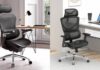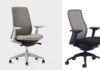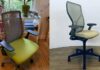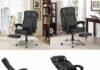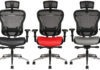


Before mesh arrived, upholstered fabric was simply what a good office chair wore. Now mesh dominates the ergonomic aisle, fabric holds the comfort-and-color corner, and buyers get torn between the two. This guide — refreshed for 2026 — lays out the honest case for each material, the traps inside the mesh category, and the one-question test that settles the choice.
Related reading: office chair vs gaming chair, and our long-hours comfort ranking where both materials compete head-to-head.
Why you should get a mesh chair
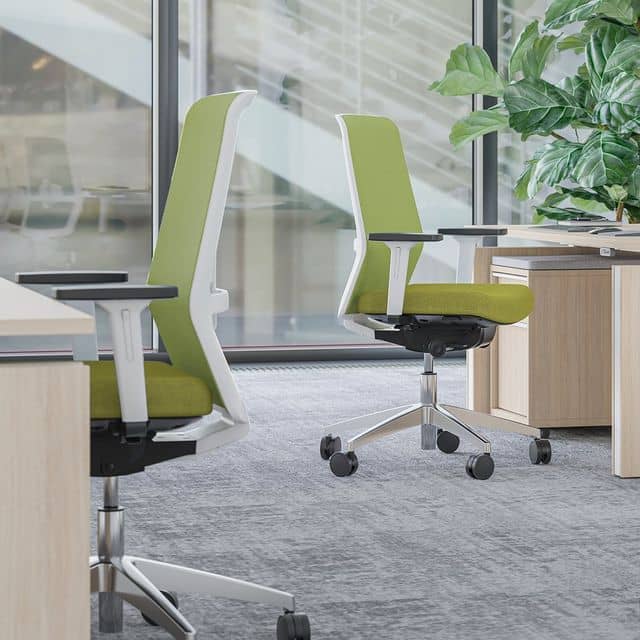
It is highly breathable
The number one reason mesh wins converts: airflow. The woven loops let air move through the chair rather than around it, and the difference between a mesh back and a padded one on a hot afternoon is not subtle — it’s the difference between a dry shirt and a damp one. Warm climate, warm office, or a warm-running body: mesh earns its keep daily.
More hygienic
Mesh looks cleaner and smells cleaner over the years, especially for heavy sweaters — the material doesn’t absorb perspiration the way upholstery does, and what does land on it dries fast. Spills mostly pass through or wipe off instead of soaking in, so a mesh chair rarely develops the mystery stains and lingering summer smell that age a fabric chair prematurely.
That floating feeling
Quality mesh suspends you — tensioned like a trampoline rather than compressed like a cushion — and owners describe it as floating. It distributes pressure evenly, it never bottoms out, and it’s a big part of why the premium ergonomic tier (Aeron and its descendants) committed to mesh decades ago and never looked back.
Advantages of a fabric chair
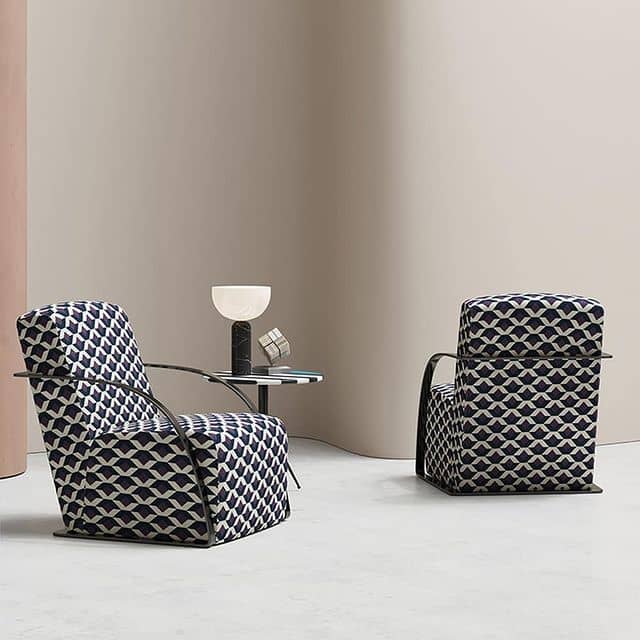
More color and style options
Mesh mostly ships in black, sometimes white, occasionally grey. Fabric ships in everything. If the chair has to match a room, carry a brand color, or simply spark a little joy, upholstery is where the palette lives.
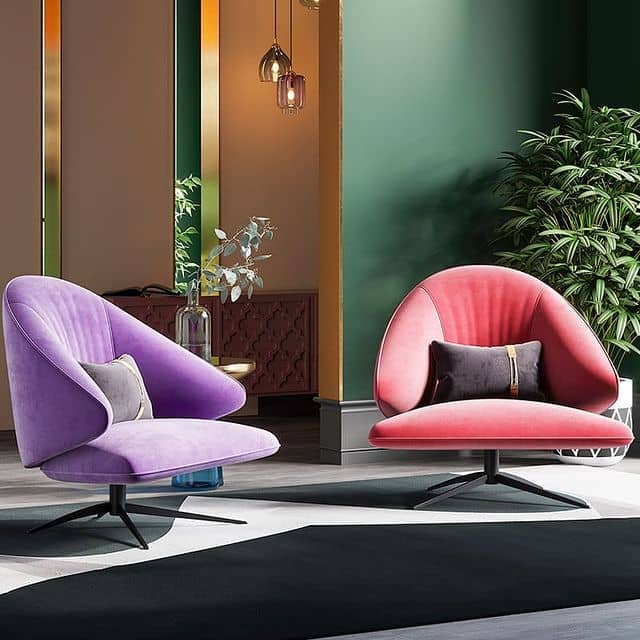
A more lounging feel
Fabric means padding, and padding means plush. If your idea of a good chair is closer to “armchair that happens to have casters” than “suspension instrument,” the cushioned fabric chair delivers a lounging comfort that mesh, by design, refuses to.
Why not buy a mesh chair — the honest drawbacks
Comfortable mesh is not easy to find. Mesh comes soft and hard. Soft mesh gives the floating feel — but cheap soft mesh, stretched over a frame with no cushion, sags into a hammock within a couple of years. Hard mesh holds its shape and feels like sitting on a park bench. The escape routes: buy genuinely premium soft mesh (the Aeron formula), or — on a budget — buy a chair that pairs soft mesh with a real cushion underneath, which resists sagging at a fraction of the price. What you avoid entirely is bare hard mesh, unless plank-firm support is genuinely your preference.
The frame makes itself known. With little or no padding, a mesh chair’s frame edges sit closer to your body — and taller sitters in particular can find the top rail digging into the shoulders. It’s a fit issue, which means it’s a try-before-committing issue.
Marathon sessions favor cushioning. Even excellent mesh reads firm by hour seven — plenty of Aeron owners keep a sheepskin or pad on the seat for exactly this reason. If your normal day is a very long unbroken sit, well-cushioned quality fabric often outlasts mesh in comfort. (Better still, break the sit — our standing desk guide is the real fix for hour seven.)
Mesh can be rough on skin and delicate clothes. The weave is plastic — typically nylon-family synthetics — and it can snag silk and scratch sensitive skin. Quality brands weave tightly enough to minimize it, but if synthetics irritate your skin or your wardrobe leans delicate, that’s a genuine mark against mesh.
It’s wrong for some environments. The open loops that make mesh breathable also catch sharp tools and debris — which is why workshops and manufacturing floors stay with solid upholstery and polyurethane.
Overall
Cooling is mesh’s headline, but don’t let it be your only gauge: mesh support is firm support, and if you want cradling plush, mesh will never give it to you. Frame contact matters too, and it only reveals itself in a real sit — so try the chair for more than a bounce, ideally from a brand with a money-back window: bring it home, do a full workday on it, then decide. On durability the materials split by price tier: quality mesh holds its shape for many years and can’t stain, cheap mesh sags; quality fabric wears gracefully but eventually pills and absorbs history, cheap fabric does both faster. Spend on construction and either material lasts.
Final say
Should you follow the crowd to mesh? Run the one-question test: does your back run hot? If yes, mesh — soft mesh, from a quality maker, ideally with a cushioned seat — will make every workday better. If you prize plush comfort, color, or marathon-sit softness more than airflow, fabric remains the fully legitimate classic. There’s no wrong material here, only a wrong match.
Last updated: August 30, 2026 — full 2026 refresh: material trade-offs updated, mesh-quality traps detailed, original imagery retained.