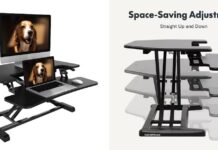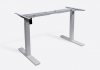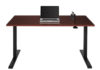

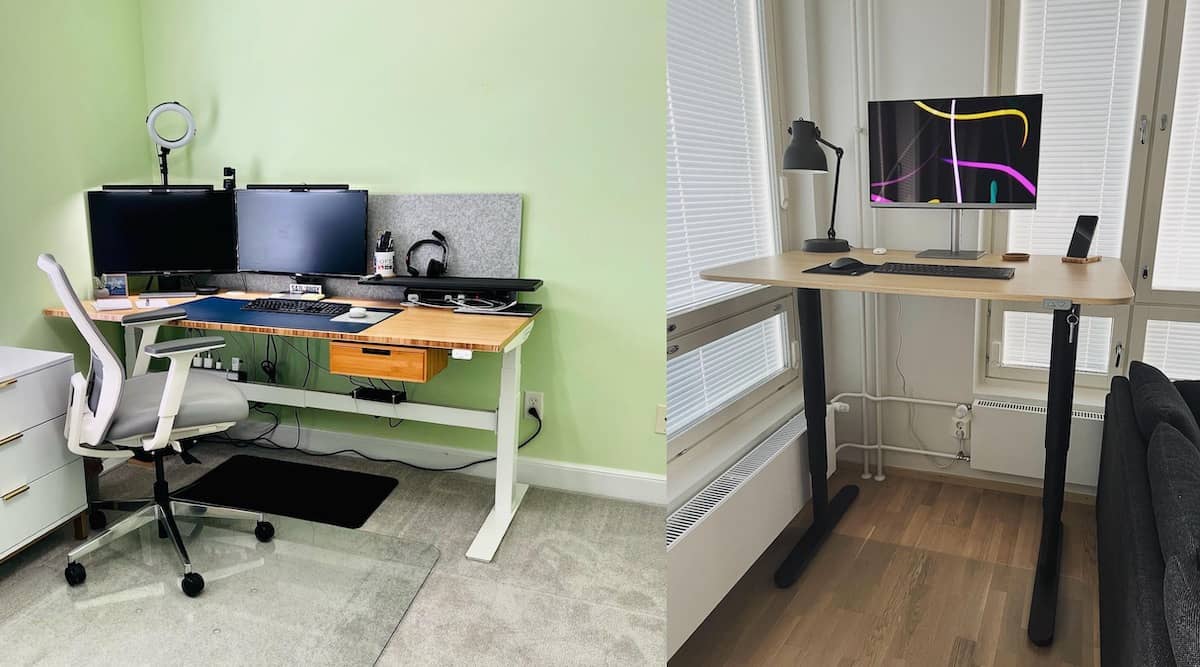
This matchup rewrote itself since we first covered it: UPLIFT no longer sells meaningfully through Amazon (it’s a direct-order brand at upliftdesk.com, now on the V3 platform), and IKEA discontinued the Bekant — its famous budget electric desk — replacing it with the MITTZON line sold through IKEA stores. So the 2026 question isn’t “which listing do I click” but “which buying philosophy fits”: UPLIFT is the specialist — deeper ranges, 15-year warranty, a giant accessory ecosystem, configurator pricing; IKEA is the generalist — walk-in availability, flat-pack pricing, simpler desks with shorter coverage. Most serious home offices should go UPLIFT; most casual or first desks are well served by IKEA.
UPLIFT in 2026
UPLIFT’s case is depth: the V3 frame’s three-stage columns cover more bodies than almost anything mainstream, capacity ratings run to several hundred pounds, the warranty is 15 years, and the configurator offers tops from laminate to solid wood plus the industry’s deepest accessory catalog. The costs are the specialist’s costs: configured builds climb fast, everything ships freight in multiple boxes, and there’s no showroom to sit at. Our detailed coverage: the UPLIFT V3 Standing Desk Review (2026): What Changed From the V2 and the UPLIFT vs Branch matchup. One channel note from our verification: UPLIFT’s old Amazon listings (including the V2-Commercial this article once linked) sit without buy boxes — order direct, not from marketplace leftovers.
IKEA in 2026
IKEA’s case is access: you can sit at the desk today, pay flat-pack prices, and haul it home. But the lineup changed under this article: the Bekant — the desk this comparison was originally about — is discontinued, a story we cover in full in IKEA Bekant Standing Desk Review (2026): Discontinued — Read Before Buying Used. Its successor MITTZON improves the frame, and the manual-crank Trotten holds the budget slot. The honest trade-offs remain: shorter warranties than the specialists, narrower height ranges, and the wobble-at-height our Bekant testing documented — softened but not erased in the new generation.
Head to head, philosophy by philosophy
Stability and range: UPLIFT, clearly — three-stage columns and crossbar-free rigidity the IKEA frames don’t match at height. Warranty: UPLIFT’s 15 years versus IKEA’s much shorter coverage is the widest gap in the whole comparison. Price of entry: IKEA, clearly — Trotten and MITTZON start where UPLIFT’s shipping ends. Ecosystem: UPLIFT’s accessory catalog against IKEA’s cable trays. Convenience: IKEA — same-day pickup and easy returns beat freight windows. Resale and longevity: UPLIFT desks hold value and parts availability; discontinued IKEA lines (ask Bekant owners) don’t.
Which should you buy?
Buy UPLIFT if the desk is a decade-long tool: daily WFH, multi-monitor loads, tall or short users outside average ranges, or anyone who reads warranty terms. Buy IKEA if the desk is furniture: a first standing desk, a guest office, a student setup, or a budget that ends under $400 all-in. And if the real question is “what’s the best desk for my money regardless of brand,” that’s exactly what our Best Standing Desks of 2026: WFHWorld’s Tested Picks From $250 to $1,000 rankings exist to answer — several picks there beat both brands on pure value. The health case for standing either way lives in our evidence review.
Last updated: August 22, 2026 — full 2026 refresh: comparison rebuilt for the V3 era and the Bekant discontinuation, dead UPLIFT Amazon listing retired, verdict reframed around direct-vs-retail buying philosophies.