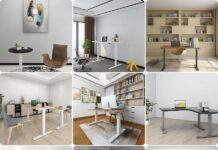

You can put a real standing desk in your office for a fraction of retail price if you bring the labor — and in 2026 the smart DIY play is usually a hybrid: buy a proven electric frame on its own, supply your own desktop, and let the motors do what sawhorses never could. Below are the three routes we recommend — the classic IKEA-style fixed riser for pocket change, the electric-frame hybrid that builds a flagship-class desk for mid-range money, and the full scratch build for people who own clamps — plus the mistakes that sink first-time builders.
Building a standing desk for the office on your own
Start by being honest about which builder you are. If you want the cheapest possible way to try standing, build the fixed riser. If you want a desk you will still love in five years, build the hybrid — it is the one we steer most readers to, and the reason this guide got a full rewrite. If you want a project, build from scratch. All three routes below assume the same goal our How To Choose The Best Standing Desk in 2026 guide sets for bought desks: elbow-height surface, stable at your working height, cables managed.
Route 1 — The fixed riser: the classic IKEA-style hack
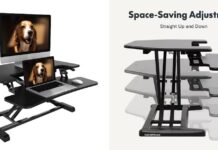
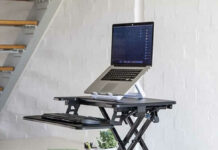
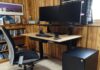
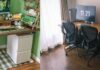
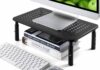
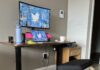
The famous “standing desk in twenty minutes” build still works: a small side table or wall shelf on top of your existing desk raises the keyboard and screen to standing height, a bracket-mounted shelf lifts the monitor higher, and the whole bill of materials costs less than a family pizza night. It is the fastest way to learn whether you will actually stand — the only question that matters before spending real money. The limits are just as famous: the height is fixed (so it fits exactly one person), the look is dorm-room, and switching back to sitting means lifting gear off a perch. Treat it as a thirty-day experiment, not furniture; if you catch yourself standing daily, graduate to Route 2 and give the parts back to the closet.
Route 2 — The electric-frame hybrid: our recommended build
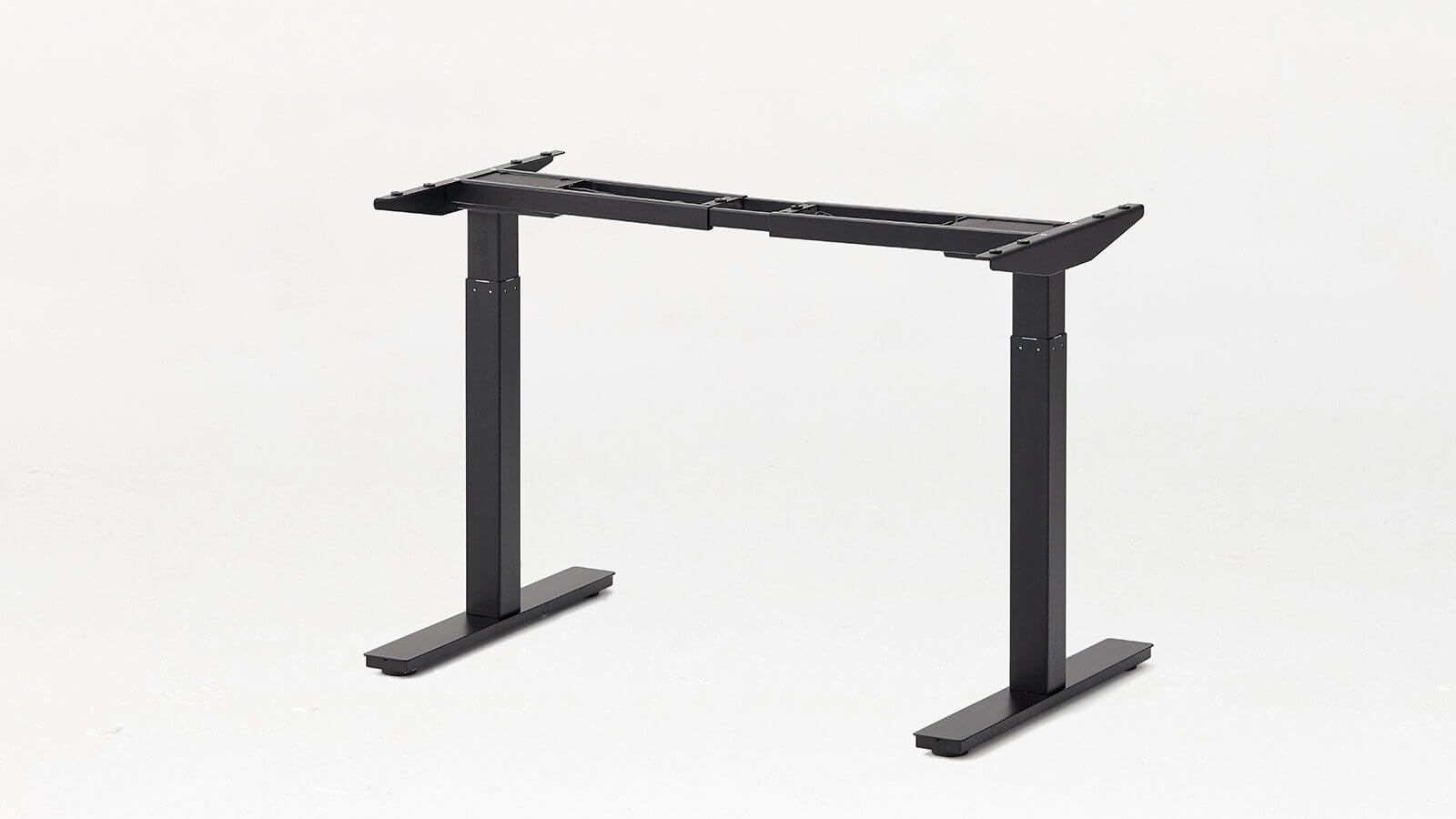
 Monoprice Electric Dual Motor 3-Stage Height Adjustable Sit-Stand Desk Frame V2, 220 lbs Weight Load Capacity, Ergonomic, for Home and Office, Black - Workstream Collection
- Genuine dual-motor, three-stage frame at a frame-only price
- Sold and shipped first-party by Amazon
- 220-pound rating
- Works with any top you supply
- No desktop included, you do the drilling
- Basic keypad and no anti-collision
- Support is functional, not famous
Here is the math that makes this the default DIY route in 2026: legs are hard to build and tops are easy. A frame-only purchase gets you dual motors, three-stage columns, memory presets, and a factory warranty — the parts no garage can replicate — while the top, the part you touch all day, becomes the fun part. Monoprice’s Frame V2 above is the reference deal (a genuine dual-motor, three-stage electric base sold first-party by Amazon, rated for 220 pounds), FlexiSpot and VIVO sell frame-only versions through their official storefronts, and Autonomous still offers its SmartDesk frame kit direct — the option the original version of this guide was built around, and still a fine one.
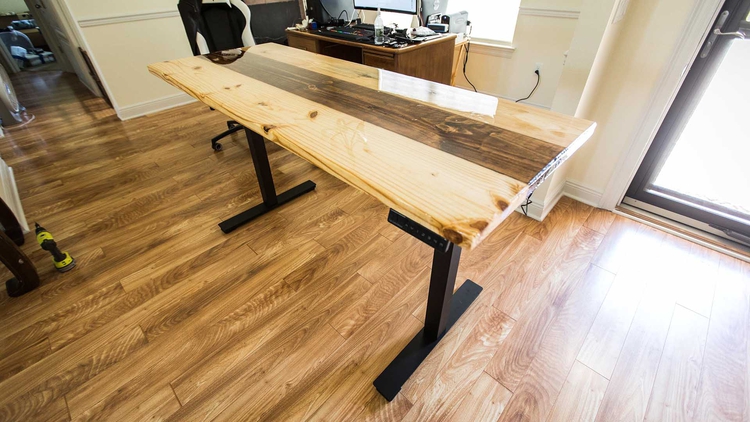
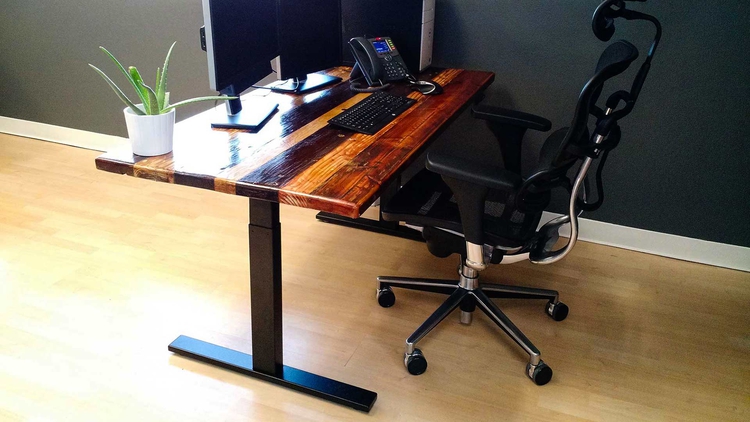
For the top: a butcher-block slab from any big-box hardware store is the crowd favorite (heavy, flat, sandable, gorgeous with oil), an IKEA countertop is the budget classic, and a salvaged solid-core door is the free-if-you-are-lucky option. Aim for 1 to 1.5 inches of thickness, pre-drill every screw hole with tape-flagged bits so you never break through the show face, and mount the controller where your thigh will not bump it. Total build time is an honest afternoon, most of it top-finishing.
Route 3 — The full scratch build
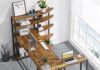
Lumber legs, a plywood or glued-panel top, corner braces, and a weekend: the scratch build produces a fixed-height standing desk sized exactly to your body and room, for the cost of materials. Build it to your standing elbow height minus your keyboard’s thickness, brace diagonally (racking is what kills homemade desks, not weight), and finish the top like you mean it — polyurethane for armor or hardwax oil for repairability. The scratch build’s real product is pride; its real cost is that nobody else in the house can use it comfortably, which is exactly the problem the motorized routes exist to solve.
The mistakes that sink first builds
Five failures account for nearly every abandoned DIY desk our readers confess to. Building to a guessed height instead of measured elbow height — measure twice, in your actual shoes. Skipping the cable plan — a $15 tray screwed on during assembly beats every retrofit, and doubly so on a moving desk. Underestimating top weight — a thick hardwood slab can eat half a budget frame’s rating before the monitors arrive; check the math against the frame’s spec. Ignoring wobble bracing on fixed builds — diagonal braces or a rear apron, always. And finishing in a hurry — two thin coats with a light sand between outlive one thick coat by years. None of these cost real money to avoid; all of them cost real money to fix.
When buying beats building
The honest crossover point: once you price a quality frame plus a bought butcher-block top plus your weekend, you land within sight of what finished mid-range desks cost on sale — so if none of the three routes above sounds like fun, buy the finished desk with the warranty and zero sawdust; our tested picks live in Best Standing Desks of 2026: WFHWorld’s Tested Picks From $250 to $1,000, and the budget matchup between a finished FlexiSpot and the frame-only route is exactly what FlexiSpot E5 vs Monoprice V2 (2026): The Budget Showdown, Re-Verified settles. Build for the top you cannot buy; buy for the frame you cannot build.
Last updated: August 17, 2026 — full 2026 rewrite: three-route framework (fixed riser, electric-frame hybrid, scratch build), first-party Monoprice Frame V2 added with live pricing, static prices removed, mistake list and buy-vs-build math updated.