
Buying just the frame — and bringing your own tabletop — is still the smartest route to a standing desk that fits your space and your budget. It’s also just as easy to get wrong as buying a whole desk. This guide, re-verified for 2026, covers how to size and judge a base, and which frames are actually still buyable this year — a list that changed more than any other category we track.
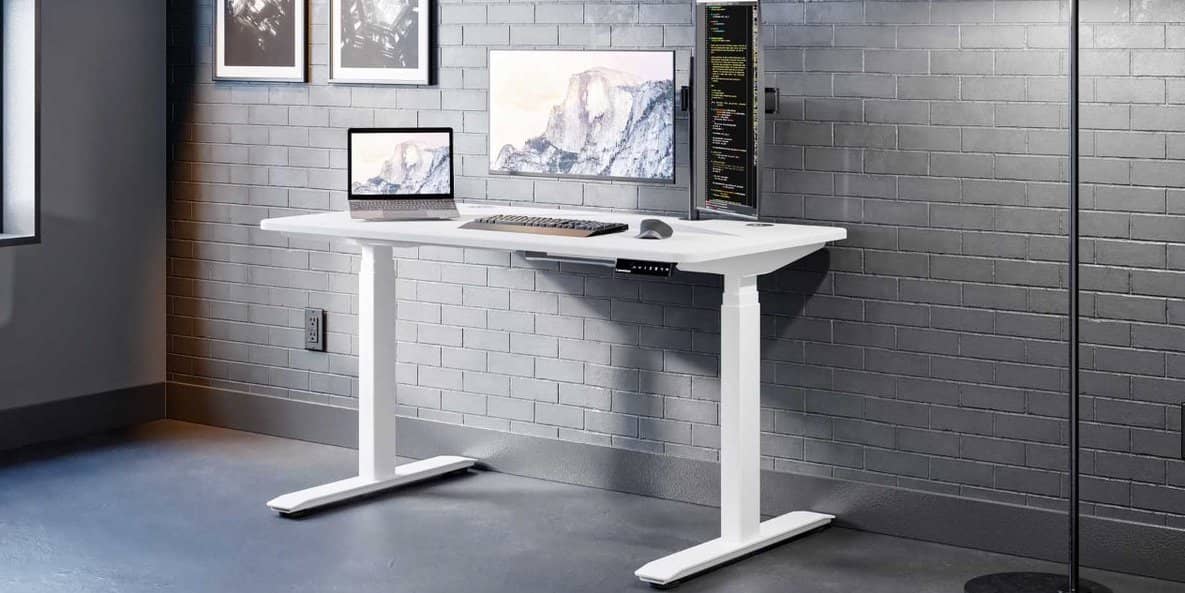
Why DIY the frame at all
Cost savings, mostly — plus personalization: a reclaimed door, a butcher block cut to your alcove, a top no catalog sells. Buy the bare electric base and you still get the height adjustment, stability, and memory presets of a finished desk. One caution up front: this is the wrong category for bottom-dollar shopping. An electric lifting mechanism is the one part of the desk you can’t sand smooth later.
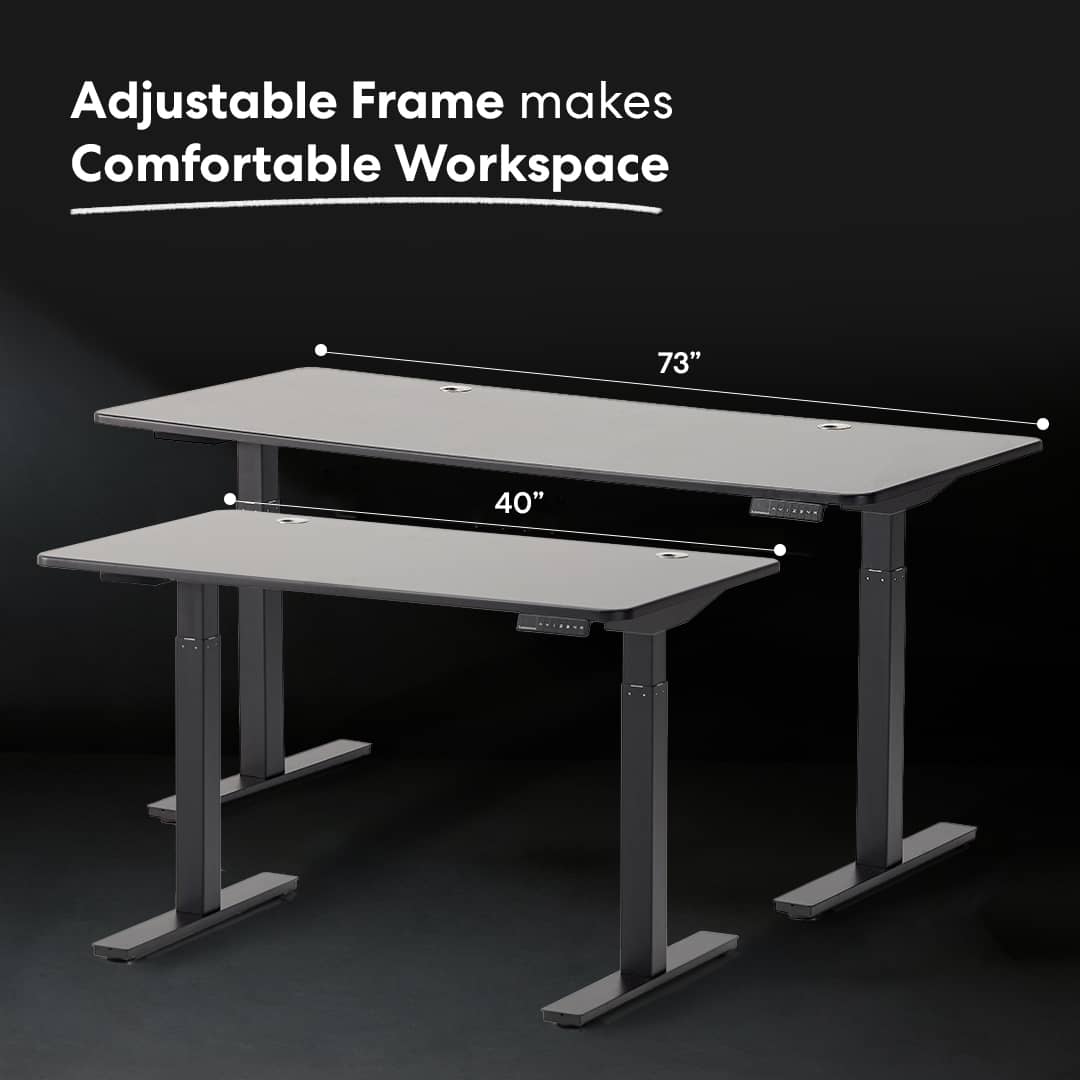
Two physics notes that survive every model year. First, lifting capacity is a budget you spend: weigh your tabletop (thick hardwood or stone tops are heavy) and subtract it from the frame’s rating — what’s left is for monitors, arms, and elbows. Second, tops wider than about 59 inches want at least an inch of thickness, both to resist warping and to keep side-loading off the lifting legs.
If you’re planning a treadmill underneath, stability at height becomes the whole game: leg segments near full extension overlap less and wobble more, so favor premium bases with taller ranges and leg-extension options (iMovR’s Lander is the archetype) and avoid living at the top inch of any frame’s range — your typing accuracy will tell you why.
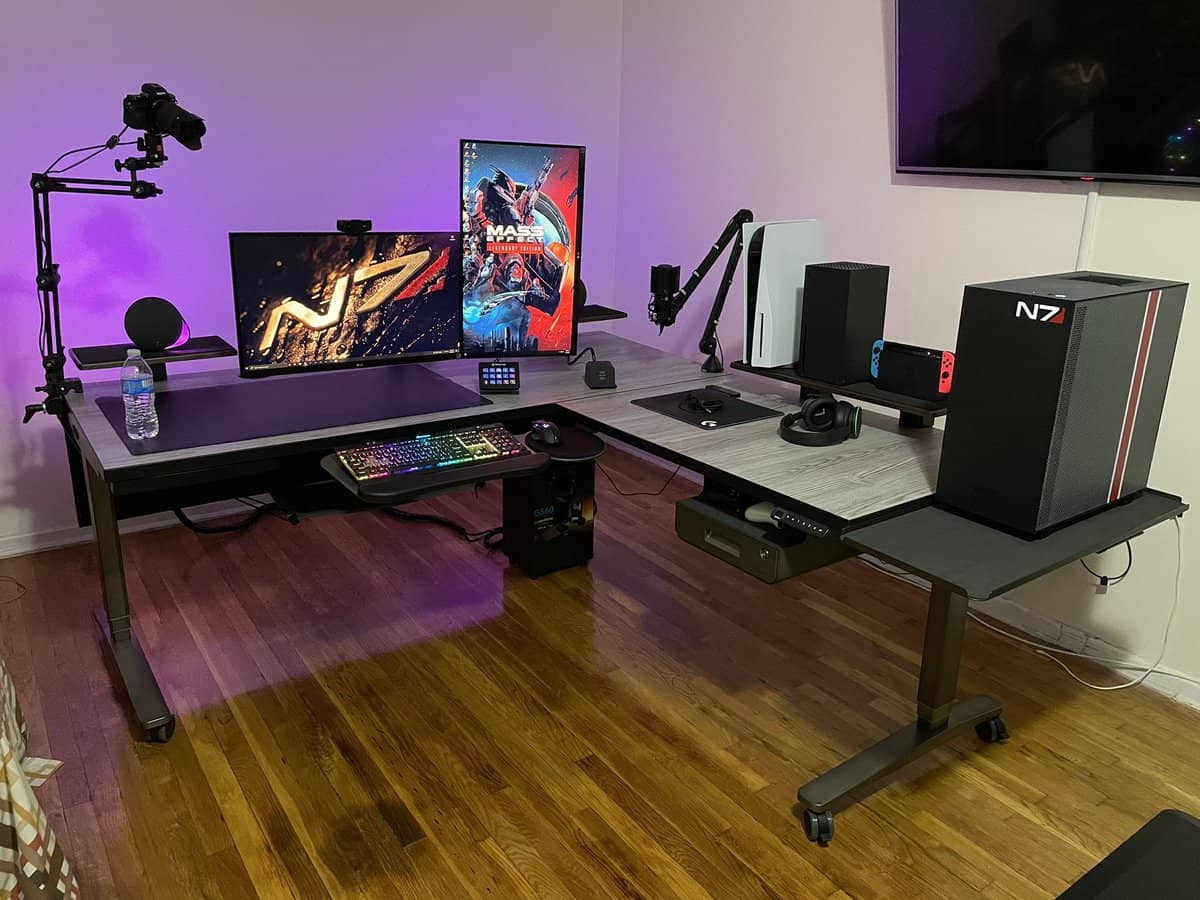
A simple guide to choosing the right frame
Know your ideal desk height
The frame’s stroke range has to cover your sitting and standing heights — especially if you’re notably tall or petite. The reference table:
| Your Height | Ideal Desk Height | Ideal Monitor Height | Ideal Chair Height |
| 4′ 10″ | 21″ – 23″ | 40″ – 42″ | 12″ – 14″ |
| 5′ | 22″ – 24″ | 41″ – 43″ | 13″ – 15″ |
| 5′ 2″ | 22″ – 24″ | 42″ – 44″ | 14″ – 16″ |
| 5′ 4″ | 23″ – 25″ | 44″ – 46″ | 15″ – 17″ |
| 5′ 6″ | 24″ – 26″ | 45″ – 47″ | 15″ – 17″ |
| 5′ 8″ | 25″ – 27″ | 47″ – 49″ | 16″ – 18″ |
| 5′ 10″ | 26″ – 28″ | 48″ – 50″ | 16″ – 18″ |
| 6′ | 26″ – 28″ | 49″ – 51″ | 17″ – 19″ |
| 6′ 2″ | 27″ – 29″ | 51″ – 53″ | 18″ – 20″ |
| 6′ 4″ | 28″ – 30″ | 52″ – 54″ | 19″ – 21″ |
| 6′ 6″ | 29″ – 31″ | 54″ – 56″ | 19″ – 21″ |
| 6′ 8″ | 29″ – 31″ | 55″ – 57″ | 20″ – 22″ |
Taller folks need frames reaching 50-51 inches; average heights are comfortable in the mid-40s, which nearly everything covers; petite users should confirm the frame drops to 23-24 inches — many budget frames don’t. And if you can physically try a desk in a showroom first, that’s returns-postage saved. Our height calculator guide pins your exact numbers.
Where is it made?
Origin still predicts behavior. Entry-level Chinese frames are the cheapest way in, with construction and warranties to match. Mid-range Chinese bases — the Jiecang-built platforms behind several big direct brands — are meaningfully better and carry surprisingly generous warranties. US- and Taiwan-built frames remain the robustness tier: anti-collision sensing, quieter and faster transitions, bigger capacities, and 10-to-15-year warranties.
Warranty
Under two years is a rip-off flag in this category: when a motor or control box goes at year three, repair often costs more than a new frame. A long warranty is the brand betting its own money the mechanism lasts — let them make that bet, not you.
Single-stage vs dual-stage legs
Count the telescoping segments: single-stage legs have two, dual-stage have three. Three segments buy a wider height range, more overlap at any given height, and therefore less shake. It’s why every “best frames” list — ours included — skews dual-stage.
Dual motor vs single motor
Dual motors lift more, move faster, and strain less; they also cost more. A single motor is defensible only for a light, laptop-grade setup on a tight budget — the moment a multi-monitor rig enters the plan, go dual.
Desktop size, presets, and price
Match the frame’s width range to your top (width-adjustable frames survive future tabletop swaps — and our tabletop guide covers the other half of the build). Prefer a keypad with memory presets over a bare up/down rocker; transition friction is what kills standing habits. And let price be a factor, not the factor — weigh it against capacity, warranty, and stability, and read real reviews before committing.
Budget standing desk bases in 2026
The budget field: what’s live now
Titan Single-Motor Adjustable Desk Frame is the survivor of our original budget picks — still sold by Titan’s own storefront with owners holding it at 4.5 stars. It’s the definition of honest basic hardware: programmable memory presets, width adjustment from 43 to 63 inches (rare at this price, great for small spaces), cold-rolled steel construction, and a 176 lb rating that suits a one-or-two-monitor setup. The wired controller and slightly untidy cabling are the visible corners cut. Its dual-motor sibling, our former step-up pick, has lost its Amazon buy box — if you want dual motors on a budget, the current value plays are the frames in our TOPSKY frame review and FEZIBO frame guide, or the VIVO V103 platform from our Jarvis vs VIVO comparison — all verified live this month.
Autonomous SmartDesk DIY kit — now a direct purchase
The famous lowest-price electric base has left Amazon (its old listing sits without a buy box) and sells as the SmartDesk Frame at autonomous.ai. The value equation is unchanged: an attractive price for a platform that’s serviceable in home trim and better in the dual-motor business edition — but if the desk will be the core of your daily work, this guide’s mid-tier options buy noticeably more stability per dollar.
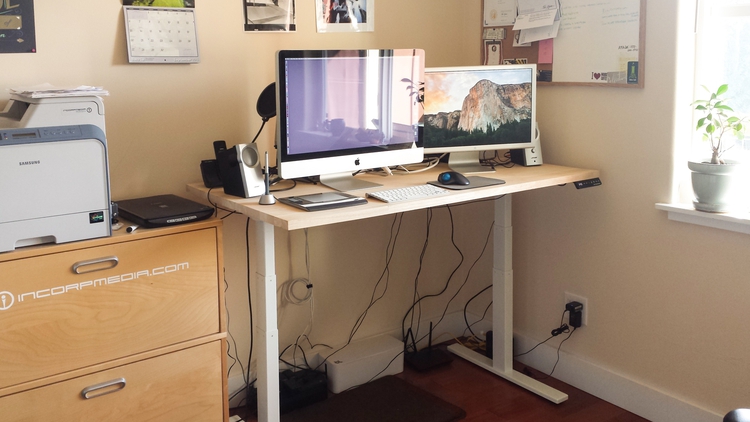
Jiecang bases — the white-label workhorse
Jiecang remains the adjustable-height frame behind a swath of mid-priced desks (Jarvis — now sold through Herman Miller’s store — and UPLIFT’s earlier generations being the famous examples). Width-adjustable across roughly 48-to-74-inch tops (stability fades past 72), shipped with either a four-preset digital keypad or a basic two-button controller — confirm which before checkout. Field reliability is a step below the premium tier, which the generous brand warranties are designed to absorb.
StandDesk Pro — a historical note
Our old budget favorite deserves a plaque rather than a link: StandDesk’s Pro base, with its 10-year warranty at a Chinese-base price, was a genuine market-mover in its day, but the brand has since faded from the direct market and its base is no longer reliably purchasable new. If you find one secondhand, the hardware was decent; as a 2026 buying recommendation, it’s retired.

Premium standing desk bases
The premium tier is now almost entirely direct-to-consumer — the quality is real, and so is the migration off marketplaces.
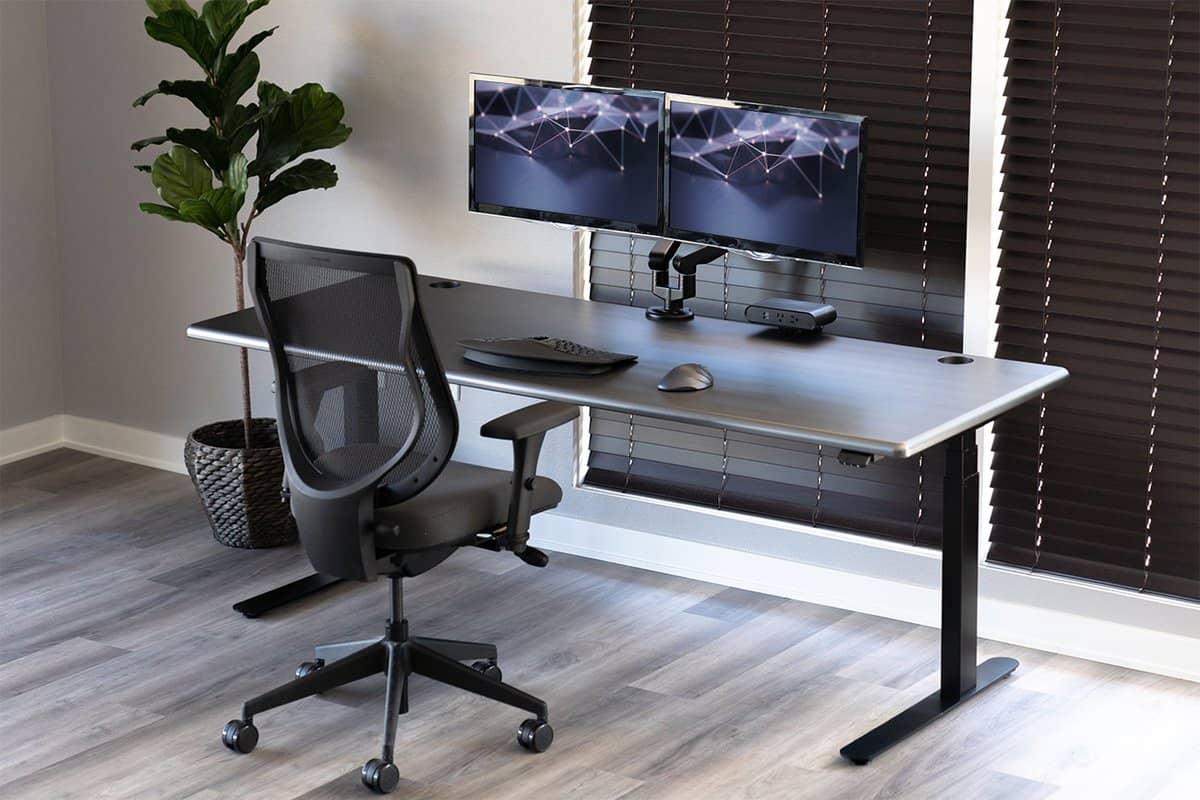
iMovR Lander
Still the performance benchmark: about 365 lbs of lift, a reach that fits the tallest users and 7-foot tops, an optional 6-inch leg-extension kit for a class-leading maximum height, and the fastest DIY assembly in the category — all under a 10-year warranty. Its old Amazon listing has gone dark, so buy at imovr.com; our Lander hands-on review covers the details, and the Cascade corner-desk review shows the same engineering in L-shape form.
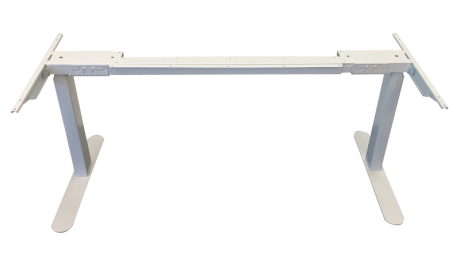
UPLIFT V2 Commercial 4-leg frame
The stability champion for heavy, wide builds: dual-stage commercial legs, a 535 lb rating, a 22.6-to-48.7-inch range that covers 5’2″ through 6’4″, four frame sizes, optional CPU holder, and a 10-year warranty. Its Amazon listing now 404s — UPLIFT sells the V2 Commercial exclusively at upliftdesk.com, where the configurator (and the accessory ecosystem from our UPLIFT build guide) lives anyway.
The bottom line
Budget build: the Titan single-motor if light and live-on-Amazon suits you, or a TOPSKY/FEZIBO/VIVO dual-motor for more capacity. Premium build: Lander or V2 Commercial, bought direct. Either way, size the stroke to your body, spend on the mechanism rather than the paint, and let the tabletop be where the personality (and the savings) come from.
Last updated: August 23, 2026 — full 2026 refresh: every frame re-verified (Titan single-motor confirmed live; Titan dual and Autonomous DIY kit without Amazon buy boxes; iMovR and UPLIFT confirmed direct-only; StandDesk retired), live-frame alternatives linked, original imagery retained.