

Two questions decide whether an ergonomic chair earns its keep: did you buy one with the right requirements, and do you maintain it well enough to last? This guide has answered both since 2018; here’s the 2026 revision — the complete feature checklist, and the ten-minute-a-quarter care routine that keeps a good chair good for a decade.
What is an ergonomic chair?
A chair designed to adjust to your body at every contact point — seat, back, arms, head — so it supports changing postures through a long day instead of locking you into one. The difference from a standard chair isn’t padding; it’s adjustability. (The full anatomy lives in our defining-features guide.)
Requirements of an ideal ergonomic chair
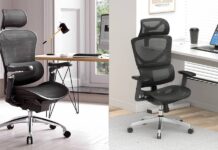
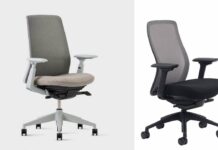
Seat height adjustment — pneumatic, with a range that fits your legs (feet flat, knees near 90°). Seat depth — two to three fingers of clearance behind the knees, ideally via a sliding seat pan. Lumbar support — height-adjustable at minimum, depth-adjustable at best. Backrest adjustment — recline with lock or synchro-tilt, so your spine changes load through the day. Headrest — optional but valuable for recliners and long calls; it should adjust in height and angle. Armrests — height-adjustable minimum, 3D/4D better, so shoulders drop and forearms rest level. Swivel base and casters — five-point base, wheels matched to your floor (hard casters for carpet, soft for hard floors; our rubber-wheel explainer covers why it matters). Footrest — not part of the chair, but the fix when desk height forces your seat up; shorter users should read the short-person fit guide.
Any chair clearing that list is genuinely ergonomic at any price — the current verified shortlist lives in our under-$500 rankings, and parents outfitting a study corner should see the kids’ chair guide.
Simple maintenance practices
Quarterly, ten minutes: flip the chair and pull hair and lint out of the casters (the #1 cause of “my chair rolls badly”); tighten every visible bolt — arms, base, mechanism — since they walk loose with daily tilting; wipe mesh with a damp cloth and vacuum fabric seats; dab a little silicone lubricant on the cylinder collar and caster stems if anything squeaks.
Yearly: check the gas cylinder holds height overnight (a sinking chair is a $25 replaceable cylinder, not a dead chair); inspect PU armrest pads and caster treads for wear — both are cheap standard parts; re-read your warranty before paying for any part, because good brands ship mechanisms and cylinders free for years.
Always: keep the chair out of direct sun (foam and mesh age fast in UV), respect its weight rating, and re-set your adjustments after anyone else borrows it — a perfectly maintained chair adjusted wrong is still the wrong chair.
Conclusion
Buy against the checklist, care for it on the quarterly routine, and an ergonomic chair becomes decade-scale equipment rather than disposable furniture. Your posture — and your replacement budget — both come out ahead.
Last updated: August 23, 2026 — full 2026 refresh: requirements checklist consolidated, maintenance schedule made concrete, internal resources updated, original photography retained.