
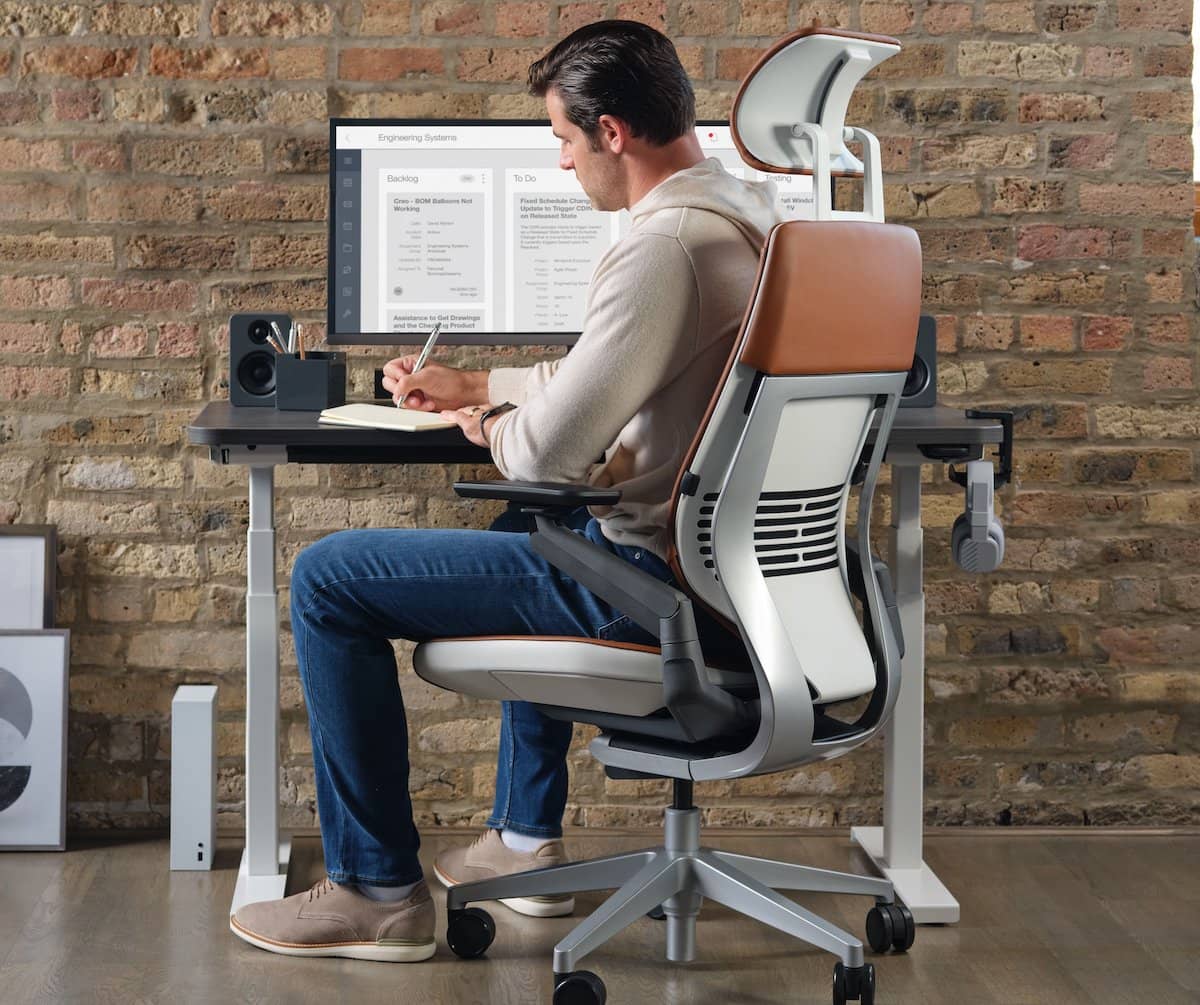
The slow sink is the most common office-chair death: you set the height, sit down, and descend like a sad elevator. Before you shop for a replacement, know this — a sinking chair is almost always a $20–30 fix, and two of the fixes take under fifteen minutes. Here’s our refreshed repair guide.
Why chairs sink: the mechanism
Your chair rides on a pneumatic gas cylinder — pressurized nitrogen behind a piston, released by the height lever. When the cylinder’s seal wears out, pressure bleeds off under load: the chair holds height empty but sinks the moment you sit. The seal isn’t serviceable, which leaves three real options — clamp it, sleeve it, or replace the cylinder.
Fix 1: the hose clamp (jubilee clip) method
The classic five-minute stopgap. Set the chair to your preferred height, wrap a 3/4-inch hose clamp around the cylinder’s polished shaft directly under the seat mechanism, and tighten it hard (wrapping a strip of rubber or duct tape under the clamp helps it bite). The chair can no longer sink past the clamp — or adjust at all, which is the trade: one fixed height, chosen once. Cost: a couple of dollars.
Fix 2: the PVC pipe method
Same idea, sturdier execution. Measure the exposed cylinder shaft’s diameter and desired height, take a length of PVC pipe that slips over it (cut lengthwise with a saw so it snaps around the shaft without disassembly), and stack pipe sections until the chair sits where you want. It spreads load better than a clamp and can’t slip — still at the cost of adjustability. Cost: a few dollars of pipe.
Fix 3: replace the cylinder — the real repair
Gas cylinders are standardized and cheap ($25–40), and swapping one is a fifteen-minute job: clamp the old cylinder, twist the base off (a pipe wrench and penetrating oil help), knock the cylinder out of the mechanism with a mallet, and press the new one in — gravity and your body weight seat it. Buy a class-4 cylinder for daily use, check your chair’s stroke length, and the chair adjusts like new. If the chair is under warranty, check first: good brands ship cylinders free for years.
At the end of the day
Clamp or sleeve it if you need the chair working today; replace the cylinder if you want it genuinely fixed. And if the sinking chair was also the wrong chair all along — undersized, unsupportive, past its padding — treat the cylinder as your sign: the long-hours rankings and the big and tall guide (where weight ratings and heavy-duty cylinders are the whole point) hold the verified field.
Last updated: August 23, 2026 — full 2026 refresh: cylinder-replacement guidance added as the primary fix, clamp and PVC methods clarified, internal links repaired, original photography retained.